In 2019 I celebrated “Ninjanuary” with several posts about the ninja in popular culture, particularly in films and books from the 1980s, and I occasionally return to that theme. Past entries can be found by clicking on the Ninjanuary tag.
When I was in eighth grade, my best friend and I came up with an idea for a movie, influenced by the ninja craze of the time. We proposed a convention of the world’s ninjas, meeting in one place and forced by circumstance to come together against some powerful threat (if we got as far as specifying what the threat was, I don’t remember it). Part of the appeal was that every ninja had a gimmick reflecting their occupation or country of origin, so in addition to the obvious black-clad ninjas with the usual weapons, we imagined a ninja yo-yo expert, a Scottish ninja who wore a kilt and fought with ninja bagpipes, and a ninja trombonist whose slide doubled as a deadly weapon (and we hadn’t even seen The Town that Dreaded Sundown!). I don’t remember everything we came up with, but we obviously stole a lot of ideas from superhero comics and professional wrestling in addition to martial arts movies.
I was reminded of this aborted project when I watched Black Tight Killers, a 1966 Japanese film (dir. Yasuharu Hasebe) that does not (at first) advertise its ninja themes; on the surface, it appears to be more of a crime film with a stylish, swinging approach common to the James Bond series and its many “spy-fi” contemporaries. Whereas in the 1980s and later, most attempts to modernize the ninja involved putting him in bulletproof body armor or turning him into a computer hacker, or maybe something with lasers, Black Tight Killers features a go-go-dancing girl gang using vinyl records, golf clubs, and chewing gum, among other mundane objects, as parts of their arsenal of (named) ninja moves, all becoming deadly weapons or means of escape in the right hands. Even though our movie about the ninja convention never made it past the daydreaming stage, it was validating to see that a similar idea had been part of the original cycle of Japanese ninja films (I haven’t dug into these movies very much, but this modern approach was novel compared to the usual historical and mythological treatments of the subject at the time).
The film begins with Hondo (Akira Kobayashi), a war photographer, flirting with flight attendant Yoriko (Chieko Matsubara) on his return flight to Japan. When they go on a date together, Yoriko is spooked by a strange man who has been watching her; when Hondo looks for the stranger to confront him, he finds the man stabbed to death and is accused of the crime by a pair of onlookers. Then Yoriko is abducted by three women in black tights and leather jackets. Before he can chase after them, he is arrested for murder. The victim, Lopez, was illegally trading U.S. dollars, and everyone who appears ready to help Hondo has their own angle. Thus begins a twisty caper with multiple interested parties and shifting loyalties, all looking for a shipment of Okinawan gold hidden by Yoriko’s late father after the war.
The only allies Hondo has are his friend Bill, an American newspaperman, and Momochi, an elderly “ninja researcher” with whom Hondo lives and trains. I was never quite clear if Momochi is Hondo’s father or sensei, or just a knowledgeable acquaintance, but I don’t think they come right out and say; in any case, Momochi helps Hondo puzzle out some of his problems and plays the same role as 007’s “Q,” giving him gadgets that turn out to be just what Hondo needs in a few sticky situations.
In one interesting bit of dialogue, Momochi shows Hondo a gas cannister used by America’s “ninja soldiers,” referring to the Army Rangers. Already we are expanding the definition of “ninja” beyond notions of clan or pedigree. The girl gang, the “Black Tights” of the title, pose as a traveling dance troupe calling themselves the “Ninjas” (hiding in plain sight, perhaps), but while we learn their background and motivations, we don’t actually find out if they’ve inherited their ninja techniques or learned them out of necessity. In this film, ninja isn’t something you are, it’s something you do.
The blurb on Night Flight Plus, where I watched this, describes Black Tight Killers as a “spy spoof.” The influence of 1964’s Goldfinger is especially obvious, not just in the cache of gold that serves as a MacGuffin but in the mileage the story gets from that film’s famous death by body painting. Still, it’s reductive to see it only as parody. The wave of heightened, Pop-Art-inspired camp that made its way into every corner of the media in the late ‘60s often had it both ways, offering real, visceral death and danger while laughing it off with a quip and a smirk.
The mixture of high and low style is another source of excitement and tension. Scenes are bathed in solid primary colors, like panels of a comic book, matching the simple, iconic profiles of the characters: detectives in trench coats, gangsters in zoot suits, good girl Yoriko always in white and the Black Tights always in, well, you know. But the film is frequently arty and baroque as well; there’s even a “dream ballet” in which Hondo reimagines Yoriko’s kidnapping by the Black Tights. The red flower of Okinawa, worn as a corsage by all the Black Tights, takes on heavy symbolic freight by the end of the film, even as the continual ironies and reversals of the plot lead to a literal punchline.
Finally, this is above all an action movie, with characters continually on the move. Other than an island-set climax, the production is relentlessly urban: Hondo’s quest to rescue Yoriko takes him from glamorous clubs to seedy photography studios and bathhouses. There are car chases, shootouts, and explosions, and there is a body count. The hand-to-hand action is about what you’d expect from a hard-boiled noir, with few of the martial arts flourishes you might expect when you hear the word “ninja”—there’s a knock-down-drag-out fight through multiple rooms of an abandoned house near the end of the film that would make Republic’s fight coordinators proud, with plenty of breakaway furniture and collapsing bannisters, all while Yoriko is caught in a literal deathtrap. “Dance! Dance all you want! It’s your last one!” taunts the villain. Yes, that’s the stuff.
In 2019 I celebrated “Ninjanuary” with several posts about the ninja in popular culture, particularly in films and books from the 1980s, and I occasionally return to that theme. Past entries can be found by clicking on the Ninjanuary tag.
When I wrote about Commando Ninjalast year, I noted how exaggerated many “retro” 1980s throwbacks are in their treatment of themes and visual styles, parodying or intensifying elements from movies and TV shows that were already larger than life. Justice Ninja Style (John Legens, 1986) is an actual product of the 1980s and a good reminder of how square a lot of that entertainment was. With distance, we’ve remembered the highest points, the most stylish or exciting moments, and forgotten the sea of formula and mediocrity from which those peaks emerged. That’s not to say Justice Ninja Style is bad—for the most part, it’s pretty charming and makes for a diverting 70 minutes or so—but it’s much more prosaic than those latter-day vaporwave creations, or, for that matter, such singular ‘80s oddities as Unmasking the Idol or Ninja III: The Domination.
While Justice Ninja Style was produced by a Hollywood company, it was shot on location in a small town with the enthusiastic participation of locals (including the police and fire departments), giving it the feel of a regional DIY movie. Everyone gets in on the act, from area musicians to kids in the local karate studio; most scenes in public places are sprinkled with extras from around town. (In that regard, Justice Ninja Style most reminded me of King Kung Fu, the 1976 monster/martial arts spoof that doubles as a tour of Wichita, Kansas’ points of civic pride.) It’s a little odd for me, having gotten used to shot-on-video movies as inherently transgressive “outsider” art, exploring themes of horror, sexuality, or (for want of a better term) mindfuckery, and severely constrained by lack of resources, talent, or interest in mainstream appeal, to watch a similarly small-scale movie that seems to aspire to being a TV movie of the week. The violence is mostly bloodless, and while there is an air of sexual menace and implied threat of rape, it’s strictly PG-rated (for the ‘80s). It’s almost wholesome.
Set in De Soto, Missouri (a small town south of St. Louis), the film begins with two women, Shelly and Carol, driving through the countryside, discussing Shelly’s frustration with the hapless George, a police deputy who keeps pushing for a date. They don’t notice the police cruiser following them at a distance. When their car gets a flat tire, Carol offers to walk to the nearby salvage yard for help (it’s the ‘80s—no cell phones, kids), leaving Shelly alone when George pulls up with his partner, Grady. While George has Grady work on the tire, he makes a move on Shelly; she fights off his aggressive overtures, and in a rage he strikes her, accidentally killing her. Before Grady can decide what to do, George senses the opportunity to frame a patsy, new-to-town karate instructor Brad, who happens to be jogging by. George tricks Brad into showing him some moves with his T-stick, getting his fingerprints all over it, and gives himself a bump on the head so he can claim Brad resisted arrest when George tried to apprehend him after discovering him with the dead woman. He browbeats Grady into going along with this and Brad ends up in a jail cell. The charge: murder.
You might expect that this injustice pushes Brad to exact bloody revenge against the corrupt cops, like John Rambo in First Blood, but while he does protest his innocence, he’s much too nice a guy to burn it all down. Brad is the main POV character, but he practices karate, not ninjitsu. No, the film gets its title and theme from the mysterious, black-clad figure who witnessed Shelly’s murder and who later breaks Brad out of jail and wordlessly offers him help along the way to clearing his name. Brad doesn’t expect either his friends (mostly fellow karate instructor Dan) or his enemies to believe that there’s a ninja around—he can barely believe it himself. But through physical evidence like the shuriken (throwing stars) left on the ground and sightings from other people, eventually the truth gets out and George faces a reckoning at the deadly hands of the ninja.
It is amusing that the De Soto police were so cooperative when the Deputy is such an obvious villain. Perhaps they were too star-struck to worry about whether the movie would be copaganda, and it is worth noting that Rick Rykart, who played George, wasn’t local. (Rykart gives the most compelling performance: he starts out as a jerk who goes too far and tries to cover his tracks, but the scenery becomes more tasty as he becomes more desperate, so by the end he’s threatening to murder four people to guarantee their silence and bellowing that he’s not afraid of any ninja.) But there’s another angle: through a dramatic contrivance, George is only in charge while the Chief is away on business, giving him an incentive to wrap the case up before the Chief returns, and with Brad (Brent Bell) and his friends counting on the Chief to recognize the truth when he hears it. Like the absent King Richard, the Chief’s departure leaves a hole that can either be filled by pretenders like George or the Robin Hood-like ninja, operating outside of the law to preserve something more important: justice.
The ninja is played by Grand Master Ron D. White, a 9th Degree Black Belt and Martial Arts Hall of Famer, who also (according to him) rewrote the script to more accurately portray the art and history of the ninja. Although he doesn’t get a lot of screen time, the film was built around White, and after its initial release, producers apparently felt that they needed to beef up his presence as well as provide more backstory explaining his character’s motivation instead of saving that revelation for the end. The expanded film was released as Ninja the Ultimate Warrior; I may be in the minority, but I don’t think it’s an improvement. The ninja is entirely silent and remains masked in Justice Ninja Style, but Ninja the Ultimate Warrior—which reveals that the ninja character is apparently named “Liberty King”—has a prologue in which White woodenly delivers exposition, and another scene establishing that George was a corrupt hothead in St. Louis before he was reduced to being a corrupt hothead in a small town. These scenes don’t add much and only make the later plot turns seem predictable instead of developing organically.
The legitimacy of White’s claim to be a real ninja isn’t something I’m qualified to dispute, but suffice it to say that there are many dubious pedigrees and many self-credentialed figures in the martial arts world. In the documentary The Ninja Speaks (on the Justice Ninja Style Blu-ray from VHShitfest), White doesn’t talk about when or how he became a ninja, other than to say that “some people liked and some people hated” his video How to Be a Ninja, an introduction to ninja weapons and techniques with some hands-on demonstrations. Perhaps it’s all kayfabe, or maybe White’s antics are a smokescreen of disinformation to protect the real secrets of the shadow warriors. It’s not my place to say.
According to Letterboxd’s year-end summary, my most-viewed actor in 2025 was Sidney Toler, who played Charlie Chan in a series of B-movie mysteries in the 1940s; my most-watched director was René Cardona, Jr., the subject of a pair of box sets from Vinegar Syndrome that I watched last spring. (Cardona was the son of René Cardona, Sr., who directed some of the installments of the Santo series, which I wrote about in 2024. The films in the Cardona, Jr. sets were primarily adventure and crime pictures.) I suppose those are typical examples of my viewing through much of the year (and, as always, you can look at my complete diary if you like), but neither body of work is particularly noteworthy beyond numerical superiority. I almost decided not to post an end-of-year list: I didn’t see very many new films in 2025, and there are obviously still a lot of movies I haven’t caught up with yet. However, I saw enough that I liked that I thought it would be worth writing at least a Top Five 2025 New Releases.
5. It would be difficult for the Marvel Cinematic Universe to pull off the conceit of the original Thunderbolts, a series by Kurt Busiek and Mark Bagley in which a new team of heroes shows up, only to be revealed that they are actually old villains operating in disguise under new names. However, in adopting the same name (with a cheeky in-universe explanation) for an ad hoc team of antiheroes, screw-ups, and antagonists from past MCU films, Thunderbolts* (dir. Jake Schreier) gives us an idea of what to expect, at least tonally. When a group of mercenary superhuman operatives is summoned to a remote lab, each with orders to kill each other and destroy the lab, it doesn’t take them long to figure out that someone in the government is trying to clean up after themselves, and they are determined to save their skins and bring the truth to light. Since this is part of the ongoing soap opera of the MCU, it helps to understand the history between White Widow (Florence Pugh) and her father Red Guardian (David Harbour, consistently a delight), and between disgraced former Captain America John Walker (Wyatt Russell) and James “Bucky” Barnes (Sebastian Stan), now a U.S. Senator. But it’s the appearance of the Sentry (Lewis Pullman), a previously unknown character, that really throws a wrench in to the plans of mastermind Valentina (Julia Louis-Dreyfus). In the comics, the Sentry was a character who had supposedly been created alongside the Fantastic Four and other Silver Age Marvel stars, but “erased” himself, forcing everyone to forget him, to protect the world from a danger he himself represented, and only reemerging in the 21st century. I liked the idea of the Sentry more than the execution, most of the time, but the film version (here depicted as a test subject given great power, but whose unresolved personal demons are a literal “dark side”) works very well and complements the theme of confronting and overcoming failure. And, as the asterisk at the end of the film’s title might hint, there is still a Thunderbolts-worthy twist.
4. I was surprised to learn that The Day the Earth Blew Up: A Looney Tunes Movie (dir. Peter Browngardt) was the first original feature film starring the famous cartoon characters (previous theatrical features were either compilations of existing shorts or live-action/animated hybrids like Space Jam), but if this was a trial balloon, it paid off. (Aside from it being good, it’s worth celebrating The Day the Earth Blew Up’s success for convincing Warner Bros. to release the previously shelved Coyote vs. Acme.) Rather than stuff the screen with characters, this one focuses on Porky Pig and Daffy Duck as adopted brothers struggling to pay off their inherited farmhouse while aliens secretly take over the local chewing gum factory for mysterious (but presumably sinister) reasons. It’s a fun balance of new and old, with plenty of references for the old-school animation heads to catch (there’s a great workplace montage set to Raymond Scott’s “Powerhouse,” the “factory” music incorporated into many classic Looney Tunes scores by Carl Stalling), but without feeling hidebound. It gets a lot of mileage from characterizations of Porky as the hard-working rule-follower, teamed up with Petunia Pig as a sweet-but-tough scientist, and Daffy as the well-meaning but easily distracted screwup. (This is original-flavor “agent of chaos” Daffy, not so much the egotistical foil to Bugs Bunny from later iterations.) The resolution to the alien plot (a spoof on 1950s alien invasion and body-snatcher movies, with nods to modern takes like The Thing and The X-Files) is suitably loony, and explains why an original alien character (voiced by Peter MacNicol) appears instead of Marvin the Martian.
3. Like a lot of people, I caught the fever for KPop Demon Hunters (dir. Maggie Kang and Chris Appelhans), first watching it on Netflix and later accompanying my wife to a sing-along screening. The film, in which the members of Korean pop trio Huntrix are secretly the heirs to a tradition of musical demon slayers, fighting off incursions from the underworld and keeping the world safe with their voices, wouldn’t work at all if the songs fell flat. But in addition to its memorable musical numbers, it’s often very funny, drawing humor and pathos alike from the characters of the three young women at its center.
2. Weapons (dir. Zach Cregger) begins with a voiceover, a child describing the night that the kids from an entire third-grade class walked out of their houses and disappeared, setting the tone for an enigmatic urban legend or dark fairy tale. It’s an approach that works surprisingly well for a story set in contemporary suburbia, and like a fairy tale, Weapons can be enjoyed as a story for its surface elements (told in fragments, from the perspectives of alternating characters, each expanding the audience’s view a little more, until finally revealing what’s really going on) or as a symbolic examination of current anxieties. In this case, the title and the specter of an enormous assault rifle that appears in a dream sequence suggest a meaning that is never stated explicitly, but in modern America, what’s the most common explanation for an entire classroom of children vanishing at once?
1. Sinners (dir. Ryan Coogler) contains multitudes: a period piece, a supernatural horror movie, a meditation on community and identity. Michael B. Jordan plays a dual role as twin brothers Smoke and Stack, who return to their small hometown in the Mississippi Delta with the idea of opening a roadhouse after bootlegging in Chicago. Their younger cousin Sammie (Miles Caton), torn between his father’s church and his worldly love of the Blues, begs for an opportunity to play guitar at the roadhouse’s opening. It’s not until Sammie’s playing literally lifts the veils between different times and places (in an audacious scene that demonstrates the “power of music”) that the genre switcheroo takes place, as the music attracts the attention of a band of Irish vampires who want Sammie’s power to revisit their own long-lost home. It’s a movie I will revisit.
In a hidden catacomb deep within a Mexican silver mine, the mine owner discovers an old silver box containing a mummified hand. When it starts moving of its own volition and drives him to replace his own hand with it, leading him to behave erratically—even murderously—his wife must face the question: is this the hand of the Devil himself? Such is the premise of Demonoid, a fun, goofy horror movie I watched near the beginning of October. That led to Sinister Hands (the hands in question belong to a swami who becomes the obvious suspect when his wealthy patroness’ husband is murdered during a séance) and Invisible Hands (featuring another grisly trophy). If I’d wanted to make a whole theme month out of it, I could have kept going with The Beast with Five Fingers, And Now the Screaming Starts, and (of course) The Hand. But regular readers know that I don’t usually plan that far in advance.
In the end, October was quite busy for me this year, but I did watch some spooky and seasonal selections throughout the month. I actually got to 31 entries, with the caveat that some of those were very short (the quasi-serial Invisible Hands is barely over twelve minutes strung together). I only got out to the movie theater once, to see the 25th anniversary re-release of Battle Royale, which I hadn’t seen before (I enjoyed it). There were some retro screenings like I’ve seen in the past, but my schedule didn’t allow me to go, so that was a bummer.
Nevertheless, I have compiled a list of varied styles, subject matters, and quality:
1. Dead of Night (Dan Curtis, 1977)
2. Demonoid (Alfredo Zacarias, 1981)
3. The Laughing Target (Motosuke Takahashi, 1987)
4. Evil Laugh (Dominick Brascia, 1986)
5. Track of the Moon Beast (Richard Ashe, 1976)
6. The Old Dark House (James Whale, 1932, rewatch)
7. What Waits Below (Don Sharp, 1984)
8. The Willies (Brian Peck, 1990)
9. Equinox (Jack Woods and Dennis Muren, 1970)
10. Death Becomes Her (Robert Zemeckis, 1992, rewatch)
15. Young Hannah, Queen of the Vampires (Julio Salvador and Ray Danton, 1973)
16. The Deadly Spawn (Douglas McKeown, 1983)
17. Haunted House (Robert F. McGowan, 1940)
18. Sinister Hands (Armand Schaefer, 1932)
19. Invisible Hands (Denis Morella, 1991, rewatch) short
20. Scare Package (concept by Aaron B. Koontz and Cameron Burns, various directors, 2019)
21. Alligator (Lewis Teague, 1980)
22. Student Bodies (Mickey Rose, 1981)
23. The Bowery Boys Meet the Monsters (Edward Bernds, 1954)
24. TerrorVision (Ted Nicolaou, 1986, rewatch)
25. The Video Dead (Robert Scott, 1987)
26. Beetlejuice (Tim Burton, 1988, rewatch)
27. They Saved Hitler’s Brain (David Bradley, 1968)
28. The Violence Movie (Eric D. Wilkinson, 1988) short
29. Savage Vows (Bob Dennis, 1995)
30. The Mascot (Fétiche, aka The Devil’s Ball, Irene Starewicz and Wladyslaw Starewicz,1933) short
31. Something Wicked This Way Comes (Jack Clayton, 1983)
Best Movie: A fearsome, insatiable predator lurks around the margins of a community, at first picking off isolated victims, gradually becoming bolder. Eventually, a dedicated police officer and a scientific expert put the clues together and battle the monster, in the face of political opponents dedicated to business as usual. Yes, Alligator is basically another riff on Jaws, but it’s an accomplished imitator with enough going for it that it stands on its own. John Sayles’ screenplay is full of memorable turns of phrase and scene-stealing characters, and Lewis Teague brings the story vividly to life, with expressionistic lighting and claustrophobia-inducing camera angles in the sewers where the abandoned baby gator grew up, before bringing it out into the open for some very satisfying carnage.
Worst Movie: It makes sense for The Video Dead to be paired with TerrorVision: both are mid-‘80s features about weird things emerging from TV screens, with some nods to MTV-era youth culture. But the pairing does The Video Dead no favors: where TerrorVision is acidly funny, satirizing Cold War paranoia, Me Generation self-indulgence, and dopey monster movies, with big performances and colorful production, The Video Dead is drab, slow-paced, and is just downright dour for a movie about zombies from a haunted TV set. I don’t know if it’s impossible for a film with such a silly premise to successfully explore themes of grief and trauma, but The Video Dead sure isn’t that movie.
Scariest Movie: I was terrified by spiders as a kid, so I didn’t go out of my way to watch Something Wicked This Way Comes when it was released. By the time I was more interested in it (I read the Ray Bradbury novel on which it’s based a few years ago), it had become somewhat difficult to find, and had a reputation as one of those 1980s kids’ movies that were too dark and scary for their target audience, like Return to Oz. I don’t want to claim it’s scarier than really brutal movies aimed at adults, but it is pretty intense, with Jonathan Pryce as the Satanic Mr. Dark and Jason Robards as a man confronting his mortality both selling the high stakes of their conflict. And the spider scene is still shocking, like a left turn into Lucio Fulci territory, its suddenness as horrifying as the arachnid invasion itself.
Least Scary Movie: I have a fondness for the hour-length B-movies of the 1930s and ‘40s, many of which were “old dark house” mysteries, featuring strangers gathering at inns or stranded at remote country houses. In the early 1940s, quite a few of these hinted at supernatural phenomena but almost always ended up with rational explanations. I watched a couple of these films this October, and I actually enjoyed Haunted House the most. It’s a charming comedy about a pair of over-eager teenage detectives trying to help a friend accused of murder, and they do eventually end up in the “haunted” house of the title. But this isn’t even a mystery in the Scooby-Doo sense, with real-life criminals trying to frighten people away, as in so many of these films; it’s just an empty house with something hidden in it. As I said, this movie was fun, but scary? It’s not even trying to be.
Goriest Movie: This year there is only one contender for this honor: Organ begins as an expose of a black market organ harvesting ring in Tokyo, and that was probably the real-life inspiration for the film. But it quickly goes in a different direction, exploring the parallel stories of a deranged amateur surgeon who chops up bodies to fulfill his own warped desires, and the disgraced cop who lost his partner to the same man. Organ’s director, Kei Fujiwara, starred in Tetsuo: The Iron Man, and brings some of that film’s avant-garde sensibilities to her project, examining without pity the many ways in which flesh and the human body can fail or be destroyed. Also like Tetsuo, Organ is a little hard to follow, jumping chronologically and between characters in an almost stream-of-consciousness manner. But the plot is less important than the imagery, the most striking of which comes from the memories and imagination of the killer.
Funniest Movie: I watched a few horror comedies this past month, but none of them really blew me away. Student Bodies specifically spoofs the wave of slasher movies that followed the success of Halloween and Friday the 13th, and it has some laughs, but it’s pretty dated and scattershot as well; Evil Laugh, while not quite a comedy, is another meta slasher that includes a horror-fan audience surrogate character a few years before Scream made everyone into genre experts. Scare Package is probably the most satisfying, intentionally funny movie of the month, although even there it’s a mixed bag. It’s an anthology film and a tribute to the video stores of yore, with the frame story taking place in “Rad Chad’s Horror Emporium” and the individual stories purported to be video tapes from Chad’s shelves. Some entries play it more straight than others, but the chapter that has stuck with me is also the most mystifying: in “So Much to Do,” by Baron Vaughn, a woman goes to incredible lengths to avoid spoilers for her favorite TV show. It’s the kind of thing that probably wouldn’t work as a feature on its own, but it’s just right as a weird, funny interlude.
Weirdest Movie: Speaking of weird and funny, Rubber is my first film by Quentin Dupieux, who has a reputation as a provocateur. I wasn’t sure how I would feel about this one: even though I enjoy genre-challenging, fourth wall-breaking metanarrative, I get annoyed when I feel like I’m being jerked around, and Dupieux pretty much begins the film by announcing that he’s going to be jerking us around, and to expect things to happen for “no reason.” But I had a good time with this; the story of an abandoned car tire that somehow becomes sentient and goes on a killing spree, rolling across the southwest and blowing things up with unexplained mental powers, is a parody of absurd monster movies, and by itself there’s not much to it. But everywhere the tire rolls it gathers new characters and perspectives, and every time things threaten to fall into a predictable rut, the ground shifts, putting events in a different light.
I hope you had a great Halloween this year. Thanks for reading!
In 2019 I celebrated “Ninjanuary” with several posts about the ninja in popular culture, particularly in films and books from the 1980s, and I occasionally return to that theme. Past entries can be found by clicking on the Ninjanuary tag.
Can we ever escape the 1980s? In the case of movies with the word “ninja” in the title, probably not (this series is proof of that). Even in 1998, The Wedding Singer conjured up an MTV-era fantasy with a distinct candy-colored look, an exercise in nostalgia for an era not even two decades past, a Grease for Generation X. As we have moved farther in time from that decade, media basking in “’80s-ness” has become more and more baroque: Vaporwave fantasies inspired by movies (of the blockbuster and Blockbuster variety), comics, and video games that were already exaggerated reflections of a complex, fast-changing world.
Commando Ninja (Ben Combes, 2018) wears its influences from the title on down: the ninja action is largely of the Cannon Films/Golan-Globus variety, with some overt homages to Godfrey Ho, and the Commando part acknowledges the Schwarzenegger/Stallone wing of ‘80s action cinema, down to the obsession with the Vietnam War and those who survived it. It’s also apparent that as the generation who were children in the 1980s (or for whom it was before their time) have grown up to create their own art, the “toy commercial” cartoon shows like G.I. Joe and Transformers have turned out to be just as enduring and influential as Back to the Future or Pretty in Pink.
Beyond the passage of time, the internet and meme-ification of pop culture is probably also to blame. Commando Ninja, like Kung Fury, was a Kickstarter-funded project, and like many crowdfunded movies, it feels like it’s deliberately pitched to the Reddit crowd who are most likely to be online to hear about it in the first place. In addition to the obvious, Commando Ninja riffs on such period touchstones as Home Alone, the Mad Max series, the films of Andy Sidaris, 8-bit video games, and Jurassic Park. (Okay, that’s from the ‘90s, but there’s always room for dinosaurs in something like this: what I recently said about “comics FUN” also applies to self-consciously pulpy movies.) I started Commando Ninja feeling that it was at least more grounded than Kung Fury, but by the end I wouldn’t even say that.
The plot of Commando Ninja flashes back and forth between 1968 and 1986 (always helpfully announcing when and where a scene takes place with title cards). It begins with a platoon of American G.I.s wading through a Vietnam delta, trading wisecracks and wary guesses about what they’re up against. They’re a diverse group, stereotypically so: the black guy is nicknamed “Snow White,” and another soldier is named “Kowalsky,” and there’s a “lovable” racist with a Confederate flag stitched to his camos. We see them from above through thermal imaging as warm red blobs, just like in Predator. When the unseen antagonist is revealed, it is a red-clad ninja with a golden facemask who can literally become invisible (again, much like the Predator). After a surprise attack, black-clad ninja henchmen finish the job of killing some of the soldiers and corralling the survivors, including hero John Hunter (Eric Carlesi).
Flashing forward to 1986, Hunter’s ex-wife is murdered at her front door by a very Terminator-like pizza delivery man, and his tween daughter nearly escapes from a pair of bumbling ninjas by means of homemade booby traps. But she hadn’t counted on the Terminator dude being invulnerable to being hit in the nuts, and he catches her. Hunter, contentedly chopping wood in a remote cabin in Canada, is approached by an Air Force official: Leeroy Hopkins (Philippe Allier), the redneck we last saw getting his arm blown off in Vietnam, now outfitted with a cybernetic replacement. He has good news and bad news: Hunter’s ex-wife is dead, and the bad news is that his daughter has been kidnapped.
It’s hard to tell how invested writer-director Ben Combes is in recreating the nastier edge that was often present in ‘80s action movies, whether he’s reveling in the perceived freedom to not be “politically correct,” or if he’s ironically pointing out the racism and misogyny baked into their premises. Ultimately, it’s not my problem, but Combes was invested enough in the side character Hopkins to give him a Taxi Driver-style prequel short that explains how he went from disabled Vietnam Vet to Air Force cyborg, and it involves slaughtering a ring of murderous Viet Cong guerillas in 1970s New York City.
Or perhaps it is a matter of perspective: although made in English, Commando Ninja was a French production. Kung Fury was made in Sweden. The post-apocalyptic ‘80s pastiche Turbo Kid was made in Canada. That isn’t to say that Americans don’t also tell these stories, but the non-domestic versions are often markedly weird, like a copy of a copy. Is this what the United States, filtered through the media we export, looks like to the rest of the world? I’ll admit that absurd macho posturing is a big part of our national brand, especially now.
In any case, John Hunter, Commando Ninja, springs into action, tracing his daughter’s kidnapper to his old nemesis, Kinsky (Olivier Dobremel), who was working with the Soviets in 1968 but now appears to be an independent crimelord with his own army of ninjas at his disposal. He chills at his luxurious mansion in a fictional Central American country, surrounded by bodyguards and beautiful women in bikinis, and has apparently arranged the kidnapping to extort Hunter into doing his dirty work. Kinsky is pointedly Jewish: make of that what you will. (There are some nice touches in these sequences, like the Garfield phone Kinsky uses to communicate with his henchmen, and the varied uses of the Nintendo Power Glove to represent high-tech gadgets.)
Things don’t go according to Kinsky’s plan, and along the way, Hunter recalls the imprisonment he suffered in Vietnam at Kinsky’s hands, and the means of escape he was given by a sympathetic Chinese Colonel (Thyra Hann Phonephet) who introduced him to martial arts and the path of the Commando Ninja. (Other questions answered by flashbacks include the sad story of Kowalsky, the soldier-turned-Terminator whose brain was replaced with a “powerful four-megahertz processor.”) Of course, Hunter uses the lessons he learned from his sensei to defeat his old enemy the red ninja, and then things really get weird.
The criticisms I have may make it sound like I didn’t enjoy Commando Ninja, but for what it is, I was entertained and even laughed out loud sometimes. Carlesi has the physique and demeanor of an original ‘80s action hero, and while much of the violence is played for laughs, with exaggerated blood squibs and exploding dummies, the hand-to-hand combat sequences are effective. The music convincingly evokes John Carpenter and Kenny Loggins to get the audience pumped up. There are more real location shots than you might expect, with greenscreen and CGI reserved for the really outlandish scenes. It also moves briskly and doesn’t wear out its welcome, coming in at under 70 minutes. But if you’re left wanting more—and the film does end on a cliffhanger—Commando Ninja is just the beginning of a burgeoning franchise: in addition to the aforementioned short Hopkins, a full-length sequel was completed last year and there’s also a prequel comic book. As of this writing, Commando Ninja is available to watch on YouTube.
It’s tempting to look at pop culture trends in the 1950s and ‘60s in broad strokes, shaped by after-the-fact simplifications like Toy Story 2. In that film, classic cowboy Westerns were put out to pasture (heh) with the launch of Sputnik and the beginning of the Space Race, and almost overnight children’s imaginations turned to science fiction. In the long run, I suppose that did happen, but over decades rather than months or weeks. Throughout the 1950s and much of the ‘60s, Westerns (and related frontier and outdoorsman stories) remained popular with kids (and adults), and while sci-fi eventually overtook them in relevance, there were multiple attempts to combine the two popular flavors. Gene Roddenberry may have pitched Star Trek as “Wagon Train to the stars” and codified space as “the final frontier,” but he wasn’t the first to make the connection. Craig Yoe, prolific historian and anthologizer of comics, has produced a fun and informative volume in Space Western Comics, reprinting and contextualizing a run of adventure stories combining cowboys and aliens from the 1950s. It’s perfect reading for Vintage Science Fiction Month.
It’s worth noting that the term “space Western” was sometimes used (derogatorily) in sci-fi publishing and fan circles to describe stories that were just the same old formulaic good guys confronting bad guys dressed up in otherworldly verbiage, with rayguns replacing six-shooters and spaceships replacing horses. (Star Wars was attacked in the ‘70s by purists along exactly those lines, but at least Star Wars had considerable artistry on its side; in the ‘50s the white hats vs. black hats approach was strictly the domain of hacks.) But there were some literal space Westerns as well that combined the terminology and iconography of both genres into a single, (mostly) coherent story world. (I wrote about this weird subgenre several years ago and went into detail on the movie Cowboys & Aliens, at the time the most current example.)
Westerns in the first half of the twentieth century weren’t limited to the Old West. Real-life ranches and cowhands were enough of a reality that so-called “modern Westerns” could tell stories of pure-hearted (often singing) cowboys fighting cattle rustlers, land-grabbing oil or radium speculators, and other unscrupulous villains while using up-to-date technologies like automobiles, airplanes, and radio. While fanciful, these modern Westerns ostensibly took place in the “real world” of the 1930s, ‘40s, or ‘50s. Naturally, some of the same futuristic devices that were appearing in contemporary serials and comic books—miraculous rays, rockets, and the compelling but imperfectly-understood “television”—made appearances in the modern Western setting as MacGuffins or mysteries that needed to be unraveled. A cycle of “gadget Westerns” ran its course in the serials of the 1930s, but none of those involved actual space travel or alien visitors. The Phantom Empire, which famously sent Gene Autry underground to confront an ancient, advanced civilization miles beneath his ranch, stands out as an example of the Western exploring inner, not outer space.
So it is perhaps not surprising that the still-popular Western genre, chasing after trends, would incorporate UFOs, space travel, and alien life in an attempt to hold fickle audiences’ attention. And it is even less surprising that comics—a business with low costs and quick turnaround compared to the movies—would be in a position to take advantage of the brief moment when cowboys and spacemen appeared to be on equal footing (at least with the allowance-spending children of America).
In 1952, based on a suggestion from Charlton co-publisher Ed Levy, the already-extant Cowboy Western Comics changed its title to Space Western Comics (a common practice: instead of starting a new series with issue number one, it was believed that high numbers were more attractive to newsstand buyers, as they suggested a successful track record). Walter P. Gibson, the prolific writer and magician who developed and ghost-wrote The Shadow for Street and Smith, among many other projects, wrote and edited the adventures of “Spurs” Jackson, a rancher and electrical engineer whose ranch becomes the center of zany outer space adventures. (Shades of Gene Autry!) Artists John Belfi and Stanley Glidden Campbell provided the illustrations. The book reverted to Cowboy Western after only six issues, but a couple of stories starring Jackson from later issues are included in Yoe’s volume for the sake of completeness, as are two space-themed stories from Buster Crabbe’s comic book. (Crabbe had, of course, played both Flash Gordon and Buck Rogers in addition to cowboy roles, so this made perfect sense.)
Space Western Comics begins with the Space Age already underway: flights to the moon have become routine, and a space station orbits the earth. “Spurs” Jackson is a character made to have adventures: unmarried and wealthy enough to occupy his free time inventing in his “secret lab,” the rancher-slash-engineer is charged with maintaining a 1000-foot-tall radar tower on his land (a government connection that serves to fuel several later stories), while leaving the day-to-day operations to his foreman, Hank Roper, and the Indian Strong Bow. The radar tower, which helps guide the lunar flights, attracts the attention of spaceships from Mars, who abduct the three men and take them to the red planet. There, they are presented as evidence that the Martians have conquered earth, a pretext that puts the scheming Korok on the throne of Mars instead of the rightful Queen Thula. This is classic space opera material straight out of Edgar Rice Burroughs, but the Western theme eventually pays off: Korok’s throne room is protected by a force field that prevents any metal from penetrating, so Martian weapons and the earthlings’ six-shooters are useless, but Jackson’s whip, Roper’s lariat, and Strong Bow’s bow and arrow, all non-metallic, win the day. For putting things right, Thula offers Jackson a position as her prime minister, but he can’t stay on Mars for long: ranching is an all-day job.
Some of the stories in this volume depend on the romance and exoticism of exploring other worlds, but in many of them the trouble is closer to home. Would-be alien invaders, Communist spies (sometimes disguised as aliens), criminal gangs, and even Nazis threaten the peace of the Bar-Z ranch. The desert makes for a compelling setting, full of isolated canyons and desolate flats, remote enough from civilization that no one in the cities would believe the stories but close to the Army’s testing ranges and bases so there are always plenty of troops and weapons ready to take charge of the surviving villains. As silly as the premises of these stories often are—rock men, plant men, and underground super-moles are among the aliens Jackson encounters—Gibson packs them with twists and clever problem-solving. Like a good engineer, “Spurs” Jackson out-thinks his opponents as much as he out-fights them (although he’s not above setting off an atomic bomb or two if that’s what it takes).
And frequently the twist is kept from the reader until the most dramatic moment, revealing that Jackson had his enemy’s number the whole time. In one of several text pieces, slavers from the planet Letos are foiled by a ship full of humanoid robots supplied by Jackson—“robots” who are actually humans in bullet-proof robot costumes. (Postal regulations required the text pages to secure favorable magazine rates; they were most often filled with editorials or letters columns, but short prose stories were not uncommon. The two-pagers Gibson provided for Space Western Comics are clever pulp miniatures, often written in the folksy voice of characters from around the Bar-Z. I think they would stand up well with the humorous sci-fi of Henry Kuttner and his contemporaries, should anyone think to mine comics’ text pages for anthologizing. Today, Alan Moore seems to be the only comics creator left with much affection for this archaic institution.)
Jackson isn’t the only savvy operator, either: Strong Bow is written as a more sophisticated and educated character than his Tonto-like dialogue might suggest. In more than one story, Indians appear to arrive from space, claiming to be heroes from the past or remnants of lost tribes, inviting the local Indians to overthrow the United States government. Of course, Strong Bow sees right through them, even if he might pretend to go along with the plan. (Although Space Western Comics predates the infamous Comics Code, it’s still as pro-government, pro-American, and pro-law and order as anything produced under the Code. The government and military in these stories are never less than righteous and upstanding, give or take a traitor or two in their midst, so nothing as subversive as suggesting Indian activists might have a point ever enters into the discussion.)
As I’ve alluded to in past articles, comics are a natural medium for the kind of mash-up represented by Space Western Comics: the visual shorthand that is a vital part of comics vocabulary lends itself to mixing and matching. Without attempting to catalog every example of the space Western from later comics, I’ll point to Terra-Man, a cowboy-themed villain from Superman comics. Abducted by space aliens as a child in the Old West, Terra-Man returned to earth with high-tech equivalents of the cowboy’s accessories and an alien winged horse. Current comics have embraced this kind of meta-referentiality with a vengeance, remixing popular iconographies of all kinds with kaleidoscopic variety. Sometimes it’s overwhelming, but I remind myself of being a comics reader in the 1980s, when the Big Two publishers seemed to be embarrassed by anything too “wacky,” and it was left to the independents to publish books like Marc Schultz’s Cadillacs and Dinosaurs (or for that matter, Teenage Mutant Ninja Turtles, as much a mash-up as a parody). I prefer the current acknowledgment of the medium’s silly roots, without the po-faced need to pretend that it’s all serious business.
By now, the proclamation that “comics are supposed to be FUN” is a tradition within comics that is up for grabs, just like every other past genre or practice that is ripe for revival, rehabilitation, or reinvention. Sometimes that means characters like Howard the Duck or Detective Chimp are given equal time with Iron Man or Wonder Woman; sometimes it means weaving disparate, contradictory threads into ambitious multi-layered story arcs that breathe new life into one-off concepts like the Green Team. Signifiers of “comics FUN” include (but are not limited to) ghosts, robots, dinosaurs, gorillas, and, of course, cowboys and rocket ships. Craig Yoe plays up how quaintly ridiculous the stories in Space Western Comics are, and is clear-eyed about the mercenary motives that led to its original creation. But he is equally up-front about how imaginative, breathlessly exciting, and yes, FUN, these stories are, and he has performed a valuable service by putting them together in a handsome and easily accessible package.
Happy All Saint’s Day! October was a busy month for me, but I still managed to fit some Halloween-themed activities into it. Last night, I handed out candy to trick-or-treaters with my wife. We noticed, in contrast to previous years, that it was mostly older (middle or high school-aged) kids that came to our door. There was at least one church-sponsored “trunk or treat” going on at the same time, as well as some earlier in the week around town, so perhaps that’s where the littles were. I’d say the low turnout was because it was a school night, but that’s never stopped trick-or-treaters in the past, and most of the schools around here have the day off today anyway. But we had nice weather (in contrast to a heavy thunderstorm that roared through the area on Wednesday evening) and enough traffic to say it was worth it.
On the streaming/TV front, I watched the Disney/Marvel series Agatha All Along, the follow-up to WandaVision and a perfect choice for the spooky season. It follows the witch Agatha Harkness (Kathryn Hahn), who was left powerless and trapped in the suburbs at the end of WandaVision; freed from the spell by an aspiring teenage witch with a mysterious identity (Joe Locke), Agatha agrees to gather a coven and walk the “Witch’s Road” to recover her power. Like WandaVision, Agatha All Along is one of the few Marvel TV projects that takes advantage of the structure of episodic television: the first episode is a parody/homage of prestige detective shows in the same way WandaVision aped the sitcom format over the decades to further its themes. Once Agatha is released from the illusion of being a world-weary small-town detective, the stations and challenges of the Witch’s Road lend themselves to an episodic treatment. The use of Lost-like flashbacks and time jumps and the focus on individual characters (each member of the coven is broken in their own way, walking the Road to recover their power or their purpose), leaving something for the viewer to chew on each week, also recall the best of the format.
The “folk horror” boom of recent years, especially since the release of the documentary Woodlands Dark and Days Bewitched, has also clearly had an impact on Agatha All Along. Although the Witch’s Road and the ballad that features prominently in the series are original creations, the treatment of magic and witchcraft is more detailed and specific than has been the norm in the Marvel universe, keeping the fantasy grounded in something like history and tradition. But, appropriate for a character as ambiguous as Agatha, fakery and skepticism are also taken seriously, and the series doesn’t shy away from confronting the “fakelore” that has often been a part of modern witchcraft.
It’s an engaging journey with twists and turns (and, since this is still a Marvel production, the ending sets up future stories and characters, but at least there are resolutions to all the big questions, making this more satisfying than WandaVision’s ending), and fun, lively production design (the costumers in particular must have had a blast making this).
On the other hand, I didn’t watch as many movies as usual. Sadly, I didn’t even make it out to see a movie in a theater (or anywhere else) all month, possibly the first time since I started this blog that I didn’t include a theatrical experience at all. So this year’s viewing is divided between things I could stream and catching up on my pile of unwatched discs. Only two movies were rewatches (Mexican film The Bat Woman was sort of a rewatch, but this was the first time I had watched it in English!). Every year I say, “Maybe next year I’ll concentrate on rewatching some old favorites,” but there’s always so much I haven’t seen that I never do.
1.Milk & Serial (Curry Barker, 2024)
2.Elvira’s Haunted Hills (Sam Irvin, 2001)
3.Carry On Screaming! (Gerald Thomas, 1966)
4.Hundreds of Beavers (Mike Cheslik, 2022, U.S. national release 2024)
5.The Mummy and the Curse of the Jackals (Oliver Drake, 1969)
6.Prisoners of the Ghostland (Sion Sono, 2021)
7.Night of the Bloody Apes (René Cardona, 1969)
8.Doctor of Doom (René Cardona, 1963)
9.The Nightmare Before Christmas (Henry Selick, 1993) rewatch
10.The Bat Woman (René Cardona, 1968)
11.The Panther Women (René Cardona, 1967)
12.Planet of the Female Invaders (Alfredo B. Crevenna, 1966)
13.Curse of the Blue Lights (John Henry Johnson, 1988)
14.Santo in the Wax Museum (Alfonso Corona Blake and Manuel San Fernando, 1963)
15.Kekko Kamen 2: We’ll Be Back (Yutaka Akiyama, 1992)
16. Santo in the Treasure of Dracula (René Cardona, 1969)
17.The Addams Family (Barry Sonnenfeld, 1991) rewatch
18.Slaughter Day (Brent Cousins, 1991)
19:We Kill for Love (Anthony Penta, 2023)
20.WAVE of Terror (Gary Whitson, 1988)
21.Santo vs. the Martian Invasion (Alredo B. Crevenna, 1967)
22.Robo Vampire (Godfrey Ho and Joe Livingstone, 1988)
23.The Wind (Emma Tammi, 2018)
Best Movie: There is a fine line between upending your audience’s expectations and jerking them around. The first time I tried to watch Lake Michigan Monster, I bounced off its arch tone: it struck me as being what Wes Anderson haters think Anderson’s movies are like. I did try again and ended up liking parts of it, but I also found myself irritated by its continual nudges to my ribs. Lake Michigan Monster’s follow-up, made by many of the same people, though not the same director, succeeds in part by keeping its comedic targets focused and letting the jokes land by themselves. It’s a Northwestern, a genre all but dead in recent decades; a silent-film pastiche with musical interludes; and, ultimately, a live-action cartoon. Ryland Brickson Cole Tews (who directed and starred in Lake Michigan Monster) plays Jean Kayak, an applejack salesman forced to fend for himself in the woods when his orchards go up in smoke after a too-lively night of carousing. He eventually comes under the wing of a Master Trapper who shows him the ropes. When Kayak falls in love with the daughter of the Fur Trader who keeps everyone supplied, the Trader sets him the impossible task of delivering the pelts of—you guessed it—Hundreds of Beavers.
The forest animals, played by people in mascot costumes, each have their idiosyncrasies and wiles, and a big part of the film consists of Kayak learning to play them off each other, getting traps to work and setting up Rube Goldberg-like chain reactions. (Hundreds of Beavers is quietly one of the best video game movies ever, even though it’s not specifically based on a game—through grinding, Kayak levels up from a noob who can’t even keep a fire lit through the night to an epic power player who can take out enemies in one blow, infiltrate the bad guys’ headquarters, and defeat the boss.) Meanwhile, the beavers are up to something bigger than an ordinary dam, and some surprisingly civilized beavers are following the trail of dead animals Kayak has left behind him. Hundreds of Beavers is primarily a comedy, and the few moments that could be described as horror are also played for laughs, but the film strays outside the bounds of realism, and the degree of stylization puts it in company with other past “weirdest” movies like Dave Made a Maze, so I have no trouble counting it as Spooktober viewing.
Runner-Up: I spent a good chunk of the month exploring Mexican genre movies, which I’ve dipped into in the past. This time, I ended up mostly watching movies about luchadors and luchadoras (wrestlers), including some starring Santo, the man in the silver mask, who in addition to being a champion wrestler is depicted as a detective and inventor. The majority of these films were made by the same group of personnel, so I saw several directed by René Cardona, Sr., and many of the same actors turn up in more than one of them. While looking up information about Maura Monti, the statuesque beauty who starred in The Bat Woman (not to be confused with the American Wild World of Batwoman, but just as much a cash-in on the Batman TV show craze), I found a reference to Planet of the Female Invaders, which was new to me. An example of the “Space Amazon” subgenre, it features Monti playing a dual role as the good and evil sisters who jointly lead a race of women on the dying planet Sibila. The evil queen’s plan to abduct earthlings in preparation for taking over Earth is typical of the genre, but unlike many such films, it plays it straight and does it with a lot of style.
Worst Movie: When it comes to the shot-on-video horror boom of the 1980s, fueled by cheap camera technology and a rental market hungry for product, I often like the idea of the made-on-a-shoestring, stream-of-consciousness, friends-goofing-around home movie more than I like the end result. But I keep watching, out of curiosity and hope, and out of appreciation for the amount of work that went into even the most primitive homebrew slasher. It’s inspiring, in a way—when I watch a Roger Corman film or something like The Blair Witch Project, I think, “I could do that,” and I’m impressed by friends and acquaintances who’ve actually done it. But watching these movies can also take a lot of patience, and unfortunately it’s hard for me to say that Slaughter Day is more than “interesting” to me. Shot in Hawaii, Slaughter Day depicts a disgruntled, gas mask-wearing day laborer who gains occult powers from the Necronomicon (specifically H. R. Giger’s Necronomicon, an art book by the Swiss Alien designer, the film’s funniest—unintentional?—joke). And then he kills a bunch of people until some of them fight back and—eventually—kill him. There are some cool moments in this, so I didn’t think it was completely terrible—I’d definitely rather watch this than Doll Face again—but it works better as a sizzle reel for fight choreography and special effects than as a story.
Funniest Movie: Part of a long-running series of British comedies, Carry On Screaming! is the one horror spoof in the series (I think), mostly riffing on the Edgar Wallace “stiff-upper-lip Scotland Yard detective in foggy Olde London” subgenre. A series of abductions of young women leads to a mad scientist who is turning them into dummies for department store windows. It’s all quite silly, but it works, much of it coming down to the chemistry of the regular Carry On players: knocking one or two of these out every year makes for disciplined filmmaking, at the very least.
Scariest Movie: Found footage can be tricky, although with ubiquitous cell phones and security cameras all over most urban areas, it doesn’t take as much justification for events to be caught on tape as it used to. I wasn’t familiar with Curry Barker, who has put a number of horror shorts on his YouTube channel, but Milk & Serial is right at home on the platform, purporting to be the raw footage from the members of a YouTube prank channel. They naturally film themselves and each other all the time, with other characters even pointing out the cameras when they don’t want to be filmed (the cameras surreptitiously stay on, which is one of the first clues that the pranks are a cover for more antisocial instincts). There aren’t a lot of jump scares in this, but it’s creepy in a believable way and the feeling of dread mounts as the masks come off.
Goriest Movie:Night of the Bloody Apes, in its English-language form, is one of the infamous “video nasties” banned in the 1980s in the UK. As I learned, it had a tangled history: a loose remake of the movie known as Doctor of Doom in English, it was filmed with an all-ages audience in mind for domestic release. Like many Mexican films of the time, it had alternate “sexy” takes filmed with added nudity for international markets (Santo in the Treasure of Dracula is one of the more notorious examples, but I watched the all-ages version of that this month). The American producer who bought the rights and gave it its English title added even more scenes of gore (and some brutal sexual violence), as well as (apparently real) heart surgery footage (the plot involves a surgeon transplanting a gorilla’s heart into his dying son’s body, which goes about as well as you’d expect). It’s a bloody movie, but overall not especially great. I enjoyed the far tamer Doctor of Doom much more.
On the more fun but still gory side, Curse of the Blue Lights was a low-budget production made in Colorado, and its tale of ghouls (in the classic sense of flesh-eating undead creatures) moving into an abandoned mansion in order to revive their ancient god has plenty of goopy, ooky practical effects depicting bloody violence, sucking pits of filth, and other horrifying sights. In several shots, corpses are reduced to slurry to feed the slumbering demon, a slurry that is clearly canned pork and beans.
Weirdest Movie: Nicolas Cage plays a former bank robber, a prisoner pressed into “rescuing” a girl who has run away from her role as a glorified concubine in an oppressive, post-apocalyptic city-state. That’s just the logline of Prisoners of the Ghostland, which also includes some literal ghosts (it’s not just a metaphor), a cult dedicated to halting the forward movement of time, and a garden of people dressed as mannequins. While I enjoyed it, you could imagine it was built with a Cult Movie Construction Kit, considering all the eye-catching motifs involved: It’s got samurai! Cowboys! Custom cars! Nicolas Cage himself! A scene in which the corrupt mayor sends Cage out into the wilderness with a new car, only for Cage to get out and steal a child’s bicycle, pedal a few dozen yards, give up, and get back in the car, is typical. Cage might be messing with us, just having a little fun, but can we prove director Sion Sono isn’t?
At the opposite end of the budget spectrum, but with a surprisingly similar vibe, Robo Vampire is another mash-up of sci-fi and fantasy tropes, with a bootleg Robocop (a drug agent killed in the line of duty and brought back to cybernetic life by science) facing a drug lord and his squad of Chinese hopping vampires. The lead “vampire beast,” created(?) by the Taoist monk in charge of the vampires, has a face like a gorilla and is married to a ghost. The characters fight by shooting Roman candles and fireballs at each other. It’s all in fun, though, even when it doesn’t make a lot of sense: unlike some of Godfrey Ho’s films, at least Robo Vampire appears to be made up of scenes that were all shot for a single movie, although I could be wrong about that.
Most Informative: Speaking of Woodlands Dark and Days Bewitched, like that film, We Kill for Love is a deep dive into a specific subgenre, investigating literary and cinematic roots; looking at the sociological, technological, and commercial forces that came together to give birth to it; discussing recurring tropes; and interviewing theorists, historians, and people who worked on the movies under discussion. Subtitled “The Lost World of the Erotic Thriller,” We Kill for Love focuses on the direct-to-video and cable movies that braided together film noir, gothic romance, and softcore erotica in the 1980s and ‘90s, the kinds of movies that made Cinemax famous as “Skinemax” and put Showtime on the map as opposed to the classier, Hollywood-oriented HBO. (Mainstream hits like Fatal Attraction and Basic Instinct come in for discussion as well, as those movies sparked their own imitators, such as the DTV Fatal Instinct.) I actually think this is a better film—as a movie rather than an information-delivery vehicle—than Woodlands Dark, possibly because the tropes of the erotic thriller were more codified, so there’s less “feature creep” in exploring them, but also because the central question of We Kill for Love—why don’t they make ‘em like this anymore?—makes the documentary something of a mystery to unravel itself. The frame of an investigator digging through dossiers and video tapes, accompanied by a sultry voice-over, is a nice touch, like we’re watching an extra-long episode of The Red Shoe Diaries.
Recently, “Weird Al” Yankovic released a new polka medley online to commemorate the ten years (!) that have passed since his last studio album, Mandatory Fun. Since “Weird Al” in 3-D, medleys of current popular songs in polka form have been a feature of each album and something of a signature for the artist. Yankovic has continued to be active since Mandatory Fun, touring, making one-off appearances with other artists, and producing his “biographical” film, Weird, but the new medley, titled “Polkamania!”, was a good answer to the question, “Does Al still have it?” in an era when social media-native novelty artists like Nick Lutsko and Tom Cardy are dominating YouTube.
When I started this blog and called it “Medleyana,” Yankovic’s polka medleys were one of my inspirations, but I never ended up writing much about them except in a general way. I was fascinated by the mechanics of joining together disparate compositions such that they sound like they belong together (at least when Yankovic wasn’t deliberately emphasizing the contrasts between different styles and subject matters). What began as a one-off joke (who even remembers Stars on 45, the studio medleyists Yankovic was originally parodying?) was sustained by the wit and musicianship Yankovic and his band brought to the concept. Having outlived many of the artists he built his career on parodying, it’s not unrealistic to think of Yankovic as a Haydn or Mozart of pop music, supporting the broad, entertaining strokes of his output with a foundation of craft and attention to detail. (While we don’t usually think of Yankovic as a subtle humorist, his original songs written in the style of other artists can be seen as the mirror image of the polka medleys, in which he puts his own stylistic stamp on a broad range of music.)
The delivery of a new medley every few years turned into a “state of popular music” time capsule as he continued the pattern over decades. Almost as soon as “Polkamania!” appeared last week, it was followed by commentary videos cataloging the original songs and by edits incorporating the original vocals or music videos, so clearly there is a following for these that goes beyond affection or loyalty to Yankovic himself.
With a few exceptions, most of Yankovic’s medleys incorporate hit songs (either songs that became chart-toppers or widespread memes, but were somehow inescapable) from the few years since the previous one. “Polkamania!” covers a wider gap of ten years but otherwise follows the same format. Every song referenced has been huge, whether it’s Adele’s “Hello,” “We Don’t Talk About Bruno” from Encanto, or Cardi B’s “WAP.” It ends with a song by the current biggest artist in the world, “Shake It Off” by Taylor Swift. In addition to the adaptation to polka instrumentation (accordion, of course, but also clarinet and/or trumpet, tuba or electric bass, banjo, and a near-constant off-the-beat snare drum pattern), stereotyped polka riffs form the intro and outro as well as interludes between some of the song quotations. (Notably, each medley ends in almost the exact same way, with the final song expanded into a showy farewell chorus with a “shave and a haircut” from the band.)
The humor in this and the other medleys often comes from the contrast between the original songs’ sense of cool, danger, and/or emotional earnestness and the uncool, frantic pace of a polka (not to mention the yodeling). From his nickname on down, “Weird Al” Yankovic has made a virtue out of embracing and embodying the hopelessly dorky, turning a song about lusting after an underage girl into a song about bologna, “Like a Virgin” into “Like a Surgeon,” et cetera. Since Yankovic sings the majority of the vocals in the polka medleys, his exuberantly goofy voice is also front and center; it’s like having your dad sing along when you’re trying to look cool. Sometimes Yankovic leans fully into his Jerry Lewis persona (like his shoutout to the “sexy ladies” of “Gangnam Style” in an earlier medley); his take on the unimpressed, understated “duh” that punctuates Billie Eilish’s “Bad Guy” is so broad you can practically hear the drool. How could he be expected to resist bait like that? On the same spectrum is his replacement of swear words with broadcast-acceptable substitutes, turning “a god-damn vampire” into “a gosh-darn vampire,” or sound effects. A friend of mine pointed out how much Yankovic’s humor relies on laundering some pretty dark humor for younger listeners, much like MAD Magazine did when I was a kid, so while it is easy to roll your eyes at some of these choices, you have to admit Yankovic knows his audience.
Having said that, the medleys often also work alchemy on the original songs, revealing interesting qualities that aren’t only funny. Ballads sound especially colorful when sped up and locked into rigid time. (This goes back to Spike Jones, who burlesqued Henry Mancini’s “Laura” by playing it as a galop, among other musical transformations.) Also, not all the songs are separated by interludes, with Yankovic instead juxtaposing lyrics to make one song “answer” or flow into another as if they were in conversation. Constructing a medley is like being a DJ, leading from song to song and overlapping them to decide just how much of a break the audience should hear between them. In the early ‘00s, when the charts were dominated by hip-hop without much underlying harmony, Yankovic’s arrangements often invented accompaniments out of whole cloth, and the polka-style countermelodies sometimes also bridge more than one song.
From the beginning, Yankovic also broke up the tempo, slowing down for the middle part of the medley, which is probably necessary for variety but is sometimes more effective than others. In “Polkamania!”, the slowdown occurs for Lil Nas X’s “Old Town Road,” but there is another disjunct moment introducing “WAP;” and changes in tempo lead into “Uptown Funk” and “Shake It Off,” so the cumulative effect is of separating the songs into discrete sections rather than feeling like one leads into another. For that reason, while I like parts of “Polkamania!” I don’t consider it the strongest in its overall shape.
I’ve always enjoyed listening to these medleys for their own sake, even when I wasn’t as familiar with the original songs (I know, saying “I like Weird Al’s version better than the original” or “I only know Weird Al’s version of the song” is a cliché, but I guess sometimes it’s true). The amount of attention and scrutiny they get from his audience shows that the musicality continues to engage after the jokes have become familiar.
Now, since this is something I’ve toyed with doing for a long time, and I probably won’t get a good opportunity for another ten years, my personal ranking of “Weird Al” Yankovic’s polka medleys, from least to most favorite. Like all my ratings, it is subject to change at any time. After ten years of blogging, I’ve learned the hard way that no link is forever, but all of these can be found on YouTube, Spotify, et cetera, or maybe you just own all of these already. (“Bohemian Polka,” from 1993’s Alapalooza, while stylistically similar to the medleys, is a polka cover of Queen’s “Bohemian Rhapsody,” so I’m not including it. But I don’t like it and never listen to it anyway.)
13. “The Hamilton Polka” (2018): Some of this kind of works, but overall feels like one established cultural icon welcoming another. No thanks.
Favorite song (in the context of the medley, that is): Gun to my head, “Washington on Your Side”
12. “The Hot Rocks Polka” from UHF Original Soundtrack (1989): An outlier, in that every song in this medley is from the same artist. I’m not a huge Rolling Stones fan, but Yankovic gets as much contrast from the different songs in their catalog as he can. He himself is the anti-Jagger here, draining the cool from these songs in the name of humor. It’s effective, I guess, but I never listen to this one.
Favorite Song: The interlude after “Brown Sugar” is pretty good.
11. “Hooked on Polkas” from Dare to Be Stupid (1985): Solid. Hooked on Classics was a popular medley series, putting famous classical excerpts to a disco beat, so it’s another logical title to riff on. Yankovic does more silly voices on this one (“What’s Love Got to Do with It?,” “The Reflex”), but it has good momentum.
Favorite Song: “Relax”
10. “Polka Party” from Polka Party! (1986): Notable for its constant tempo, there’s no central slower section in this one. The arrangements are getting a little more ambitious.
Favorite Song: “Sussudio,” mostly because of the little accordion riff that answers the chorus
9. “Polkarama!” from Straight Outta Lynwood (2006): This one’s kind of hard to place. The arrangement is quite good, but overall I don’t like it as much as its contemporaries.
Favorite Song: “Speed of Sound”
8. “Polka Your Eyes Out” from Off the Deep End (1992): This one isn’t my favorite, but it might be the most “Weird Al” of the medleys, the one you could play to show just what this guy is all about. It includes the “drum solo” that has become a staple of Yankovic’s live shows, and I can’t think of “Ice Ice Baby” without recalling the chipper way he says “Word to your mother!” It’s is also a good example of the time capsule effect and shows how dependent the medleys are on the current pop music landscape, as it’s an uneasy mix of Top 40 rock (Warrant’s “Cherry Pie”), hip-hop (“The Humpty Dance” was practically a novelty song in itself), and the incoming college rock/alternative wave (Nirvana is parodied by the album cover and “Smells Like Teen Spirit” was parodied as “Smells Like Nirvana,” but the B-52s and R.E.M., representing an older generation of alternative artists who had hits at this time, are represented with “Love Shack” and “Losing My Religion,” respectively).
Favorite Song: “Enter Sandman”
7. “NOW That’s What I Call Polka!” From Mandatory Fun (2014): Again, there’s a lot to like in this one, but it feels a bit repetitive, as if it spends a little too much time with each song before moving on. I haven’t quantified that or anything, but it does feel like the energy and invention are flagging compared to the earlier medleys.
Favorite Song: “Thrift Shop”
6. “Polkamania!” (2024) Solid, with the caveats about tempo changes dragging down the momentum, and as with “NOW That’s What I Call Polka!”, some of the songs wear out their welcome, but it’s fun.
Favorite Song: “Vampire”
5. “Polkas on 45” from “Weird Al” Yankovic in 3-D (1984): As mentioned, this is the one that started it all, parodying the then-popular Stars on 45, an act that had topped the charts briefly with studio-recorded medleys of just the good/recognizable bits of pop hits from previous decades. As such, this includes songs from a wider timespan than most of Yankovic’s other medleys, bringing together current New Wave hits like Devo’s “Jocko Homo” and Talking Heads’ “Burning Down the House” with classic rock including the Beatles’ “Hey Jude” and The Rolling Stones’ “Jumpin’ Jack Flash.” It’s fast, funny (including a Lawrence Welk-style “champagne music” interlude, complete with bubbles), and it still holds up.
Favorite song: “Smoke on the Water” segueing into “Sex (I’m A . . .)”
4. “Angry White Boy Polka” from Poodle Hat (2003): Solid, a great sense of transitions.
Favorite Song: “The Real Slim Shady”
3. “The Alternative Polka” from Bad Hair Day (1996): One of my favorites, really fires on all cylinders and gets a lot of mileage from the interesting chord progressions of this era of songwriting. The opening guitar riff from Beck’s “Loser” segueing into a polka makes for a terrific intro. Yankovic’s at the height of his powers as an arranger and performer.
Favorite Song: “Black Hole Sun”
2. “Polka Power!” From Running with Scissors (1999): This is another favorite, with a great sense of momentum. Hard to decide between this one and “The Alternative Polka.”
Favorite Song: The entire end section from “MMMBop” through “Sex and Candy” and “Closing Time”
1. “Polka Face” from Alpocalypse (2011): My favorite, using Lady Gaga’s “Poker Face” as a frame, starting and ending with it; great transitions, as from “Need You Now” into “Baby.”
Favorite Song: Other than “Poker Face,” “TiK ToK” is used to great effect.
Craig Sanders (of Sanders Camper and RV) is back with another self-financed opus, nominally directed by DTV auteur Omi Capek (Vampire Abortion, Vampire Abortion 2: Corona Baby), but as usual it’s Sanders’ vision on display. We last saw Sanders as the MMA-themed superhero Secret Sentinel in the film of the same name, but with F1dget, Sanders dips his toe into horror with this tale of a cursed fidget spinner.
The Sanders clan is blessed with good fortune and a thriving RV dealership, but youngest son Seth (Seth Sanders) is having trouble. He gets a B on a test and, worse yet, says that recreational vehicles are “cringe.” A fidget spinner appears to help him focus, but its cursed nature soon emerges: when Seth is told to put it away, his symptoms becomes worse, and he can’t recover until he follows the spinner’s unspoken suggestions, emphasized by close-ups and eerie music. When a neighborhood bully tries to take it, he ends up with a broken wrist. A sympathetic but misguided therapist (Clint Howard) explains that sometimes children just need to be listened to, but that kind of talk leads to a fidget spinner buried in his skull like a ninja star. Once the bully also turns up dead and the fidget spinner transforms into a rotary saw blade and flies around the house, Phantasm-style, the Sanders family needs a hero. So of course they leave their house to rough it in one of Sanders’ luxurious custom campers. There, in a tearful scene, Craig Sanders confesses that he has been living a double life as a superhero—yes, this is a Secret Sentinel stealth sequel—and promises to un-haunt their home and help Seth reach his full potential.
The last act is a full-on Home Alone homage as multiple fidget spinners get underfoot, attempt to gouge out Sanders’ eyes, and whatever else CGI and/or stagehands throwing them from off-camera can inflict upon the Secret Sentinel. Refreshingly, we never learn what the “curse” is or why they’ve gone bad. My guess is that Sanders was too late to unload a load of fidget spinners he bought before the fad crashed, as there a lot of them in these sequences, and he sure has a grudge against them. But these aren’t Gremlins or Critters or even Small Soldiers—they’re just little plastic doodads with ball bearings in them, and despite Capek’s best attempts to imbue them with personality, Sanders’ “fight scenes” end up looking like Puck Night at an NHL game.
The effects are lousy and the acting is indifferent. Without a character to play, older daughter Kaci (Kaci Sanders) barely makes an impression. At least newcomer Alyssa Gutierrez-Sanders as the kids’ mother provides two good reasons to watch. If you missed out on the Kickstarter campaign or didn’t get the DVD as a giveaway at a Sanders Camper and RV event, look for it on Tubi . . . if you can sit still for it!
In 2019 I celebrated “Ninjanuary” with several posts about the ninja in popular culture, particularly in films and books from the 1980s, and I occasionally return to that theme. Past entries can be found by clicking on the Ninjanuary tag.
I can’t believe I had never heard of Unmasking the Idol until last month. Not only is it the kind of action-adventure nonsense I always have time for, it also came out in the mid-1980s, when I was a cable-addicted teen, so I think I would have at least seen ads for it. Maybe I did see the title somewhere, but having nothing to attach it to, forgot about it until a critical mass of reappraisal could bring it forcibly to my attention: Vinegar Syndrome recently reissued it on Blu-Ray, and it was also featured on the YouTube channel Bad Movie Bible as an example of a James Bond rip-off (which it definitely is). I watched it on Amazon Prime. Watching the opening credits, in which a soul crooner delivers lines like “Revenge is sweet if you can stand the heat” over footage of ninjas practicing tai chi against glorious sunsets, I wondered if I was falling for a work, and that Unmasking the Idol was really a contemporary pastiche along the lines of Turbo Kid or Kung Fury, or perhaps the Mandela Effect had brought a “newly discovered” lost classic into existence and everyone remembered it but me.
Alas, the main reason Unmasking the Idol isn’t more widely acclaimed is that, while having a lot going for it on paper, it just isn’t very good. (So, the usual reason.) That isn’t to say it’s not worth watching or that it doesn’t have its moments. A movie about a ninja superspy with a sweet Fall Guy truck and a way with the ladies, not to mention a pet baboon who is also a ninja, taking on a masked supervillain with a skull-shaped throne room in his island fortress can’t be a complete waste of time. The cold open, before those ‘80s-tastic opening credits, gets off to a strong start: a black-clad ninja infiltrates a hotel room by night and steals a valuable tape cassette from a wall safe. Upon being discovered and cornered by gunmen, the ninja leaps from the balcony into the swimming pool several floors below. The gunmen surround the pool, waiting for their quarry to emerge, but instead a red rubber ball floats to the surface. When the trigger-happy henchmen open fire, the balloon bursts and releases noxious gas, after which a much larger balloon breaches the water and ascends into the sky, the ninja hanging on below.
After the credits, the ninja lands not far away at the entrance to a casino, where he strips off his outer layer of black clothing to reveal a tuxedo, and we go from ninja action to Bond parody. He introduces himself at the casino as “Jax—Duncan Jax,” and splits his bet at the roulette wheel between “double O” and seven. He banters with a woman named China and they end up in bed together. She meets Jax’s baboon, Boon, and the next morning there’s a short scene establishing Boon’s martial arts bona fides as he beats up some gawking rednecks. All of this is prologue to Jax’s next assignment and the actual plot of the film, so he returns to his futuristic compound and we meet the rest of his team. There’s Sato, the computer guru, who is also presented as some kind of master tactician, nearly taking Jax by surprise with a blowgun to keep him on his toes (and yes, this is basically the same shtick as Cato in the Pink Panther movies, a pattern—let’s call it homage—that recurs throughout this film; there’s hardly a character or plot beat that doesn’t feel like it came off the shelf with no further customization). A number of beautiful women share their ninja training (and hot tub) with Jax, but only one, Gunner, is given a name and she’s the only one who plays a major part in the mission. There’s Star, who issues commands to Jax on the behalf of whatever organization they both serve, and Willie, an older colleague who’s having trouble adjusting to being sidelined. And there are still more characters who must be recruited in heist movie fashion.
Their mission, once they get around to it, is an assault on Devil’s Crown, a fortified island ruled by the Scarlet Leader, an evil ninja: a huge store of gold, all of it stolen, is about to be turned over to the evil Baron Hugo (nicknamed “Goldtooth” for reasons that will become apparent) to buy nuclear warheads and start World War III. The gold, if Jax and his team can steal it first, is the prize, but Jax believes there is something even more valuable hidden on the island. Star further piques Jax’s interest by telling him that the Baron was responsible for Jax’s parents’ death, but we never hear any more about this. (We cut directly to a scene in which the Scarlet Leader throws an old woman in a wheelchair into a pool full of piranhas and alligators while her horrified husband watches, and then kills him, too. The order of the scenes suggests at first that this is a flashback to Jax’s parents’ death, but I think it’s just an illustration of how evil the Scarlet Leader is, and of course it establishes the peril our heroes will later encounter.)
To give the movie credit, the budget is on the screen: while obviously not competing with the likes of the Bond or Indiana Jones franchises, it compares well to other films imitating those flagships. It’s at least as lavish as a well-financed TV movie of the time. The modern architecture of the hero’s home and the medieval barbarism of the villain’s castle make for interesting, well-realized locations. The assault on the island brings together parachutes and hot air balloons (including airdropping Jax’s beloved truck), not to mention three-wheelers, a submarine, a helicopter, and a vintage fighter plane. And bearing the month’s theme in mind, there is more ninja action, with the attacking force relying on stealth, burying themselves in sand and leaves in order to take the Scarlet Leader’s troops by surprise (most of the violence is pretty bloodless, but the ninjas deliver a lot of kicks and neck snaps from behind, sometimes in slow motion). And of course the Scarlet Leader, much more the final boss than the Baron (whom Jax never even confronts face to face), is a villain in the classic mode: along with the obvious similarities to other colorful ninja bad guys, the Leader’s inspirations go all the way back to the hooded masterminds of the serials with more than a little Darth Vader and G. I. Joe’s Cobra Commander mixed in (the electronic voice box the Leader uses not only disguises their voice but gives it a distinctly Vader-like menace). When the Scarlet Leader is eventually unmasked, I actually was surprised at their identity, although I shouldn’t have been. It’s one of those “there are only so many characters in this film” deals.
Forgive me for making all of this sound awesome. It’s not bad, really. It just doesn’t come to life quite like it should. Part of it is how formulaic it is, alluded to above: for every weird detail like a ninja baboon, there are ten lines of dialogue you’ve heard before (shamelessly lifted from better, more famous movies, which is probably supposed to be cheeky). Jax (Ian Hunter) is the worst offender, in that almost everything he says is a one-liner delivered with the impish glee of Roger Moore at his corniest. The twinkle in Hunter’s eyes says “Ain’t I a stinker?”, at least when it’s not giving “cult leader.” It ends up feeling weightless, as no one really reacts to anything. Even the betrayal of one of Jax’s closest allies is just one more obligatory plot beat. For that matter, Jax himself seems to be irresistible to women not because of something in his character or necessary to the plot but because what kind of escapist fantasy hero would he be if he weren’t? Despite the promise of sex and violence, ‘80s-style, this is actually a pretty tame film (the execution of the old couple mentioned above is the most shocking scene, but it’s because it’s so gratuitous, not because it’s especially graphic). Amazon Prime lists it as 7+ (for “older kids,” equivalent to a PG rating); there are plenty of films I’ve explored in this series that have benefited from context and that I can appreciate more now that I’m older, but Unmasking the Idol is one that I probably would have enjoyed a lot more if I had seen it when it was new.
(Well, there’s always the sequel, The Order of the Black Eagle.)

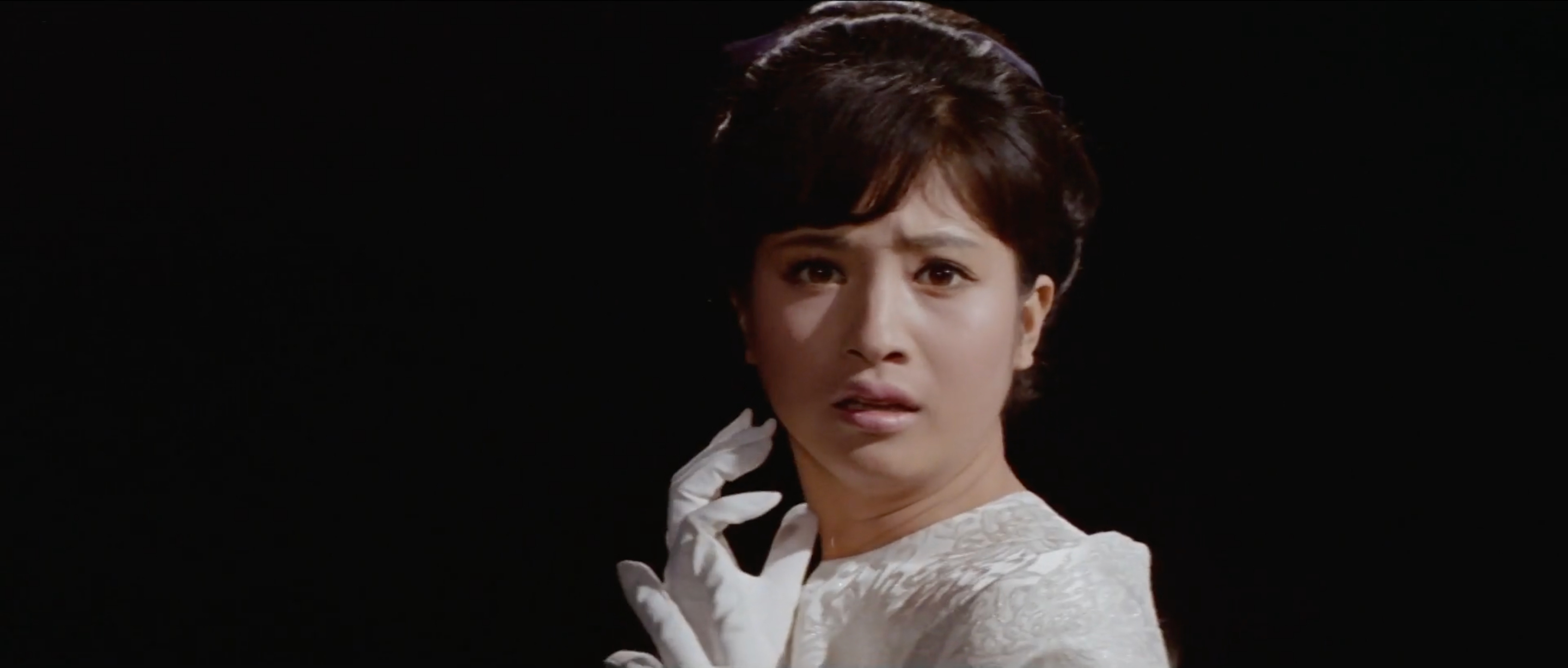
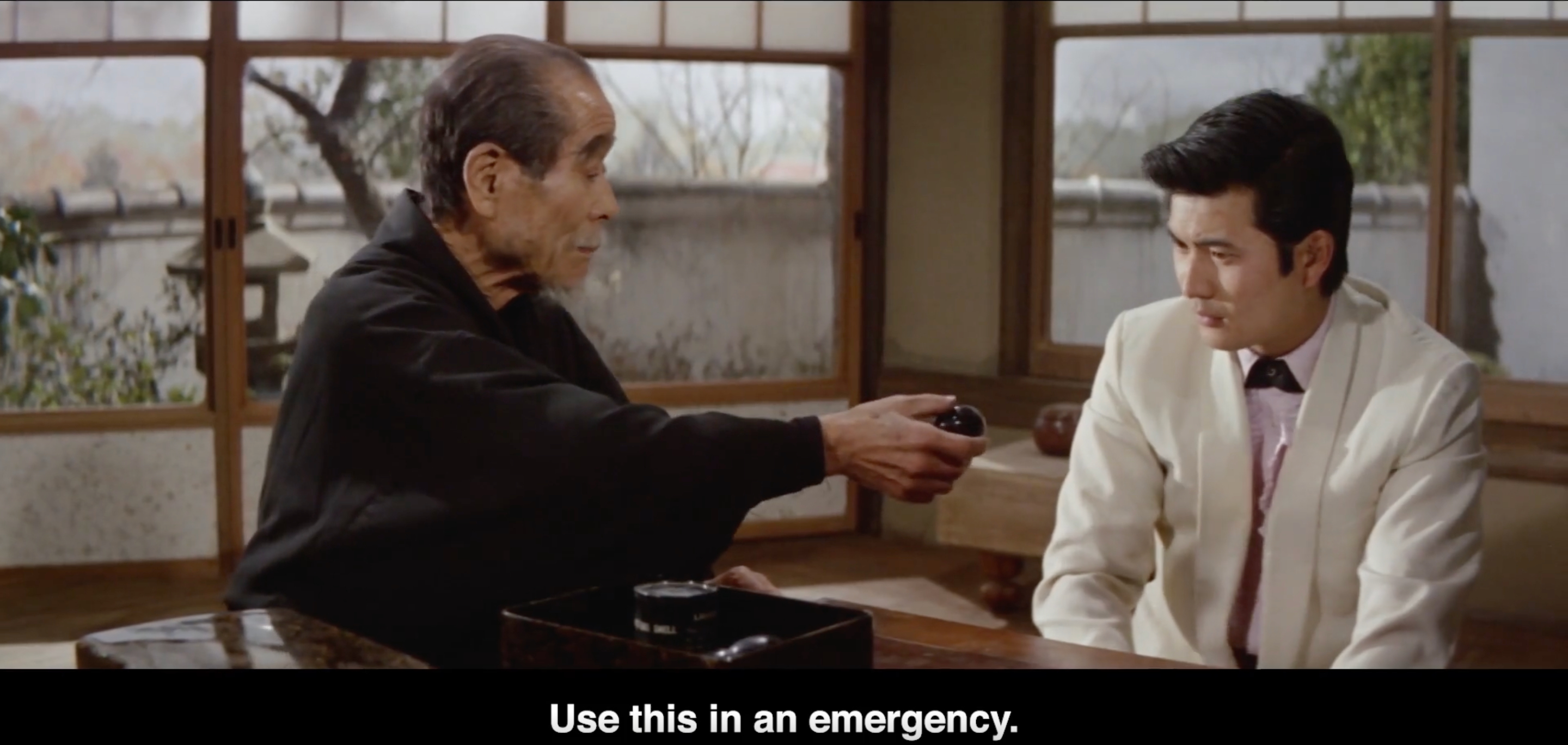
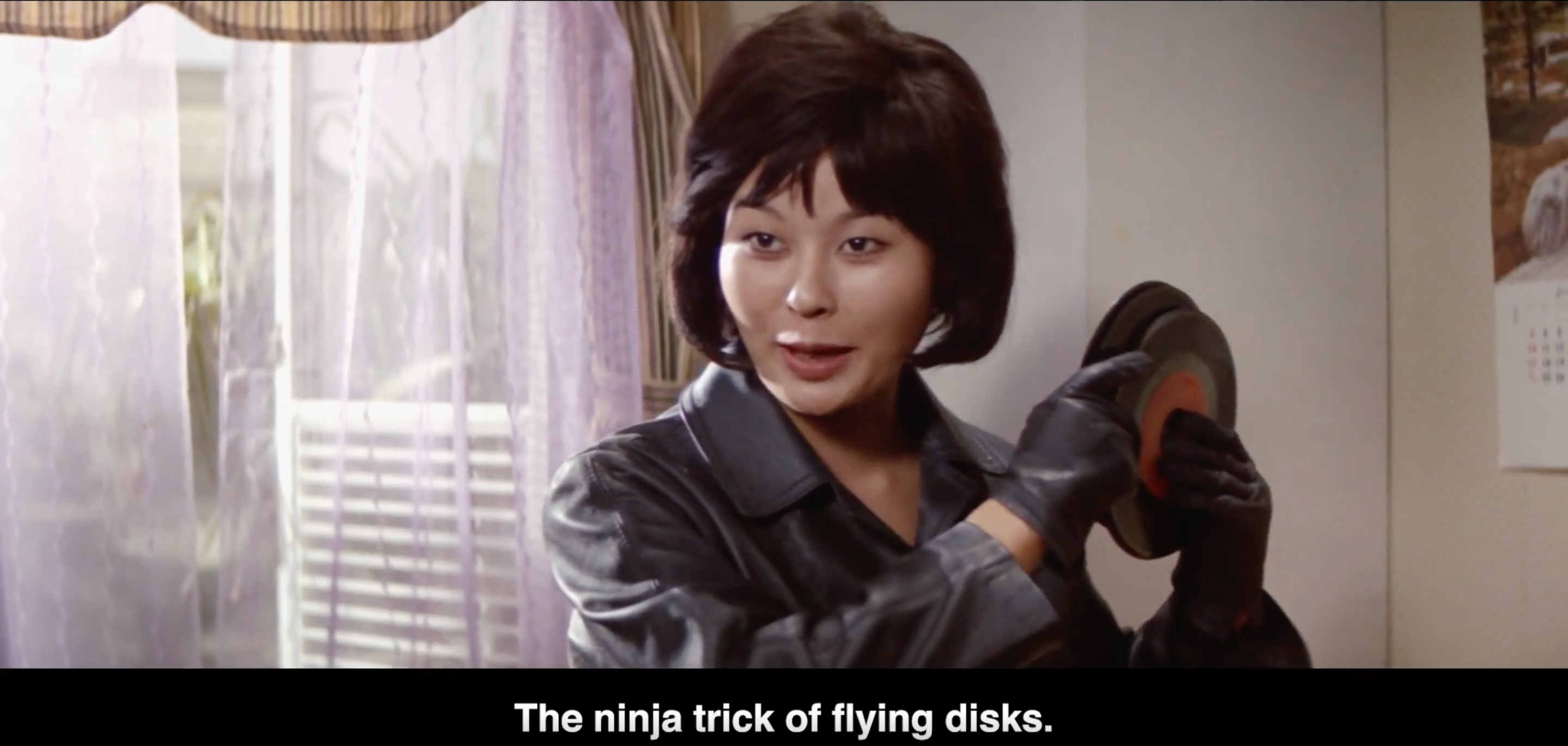

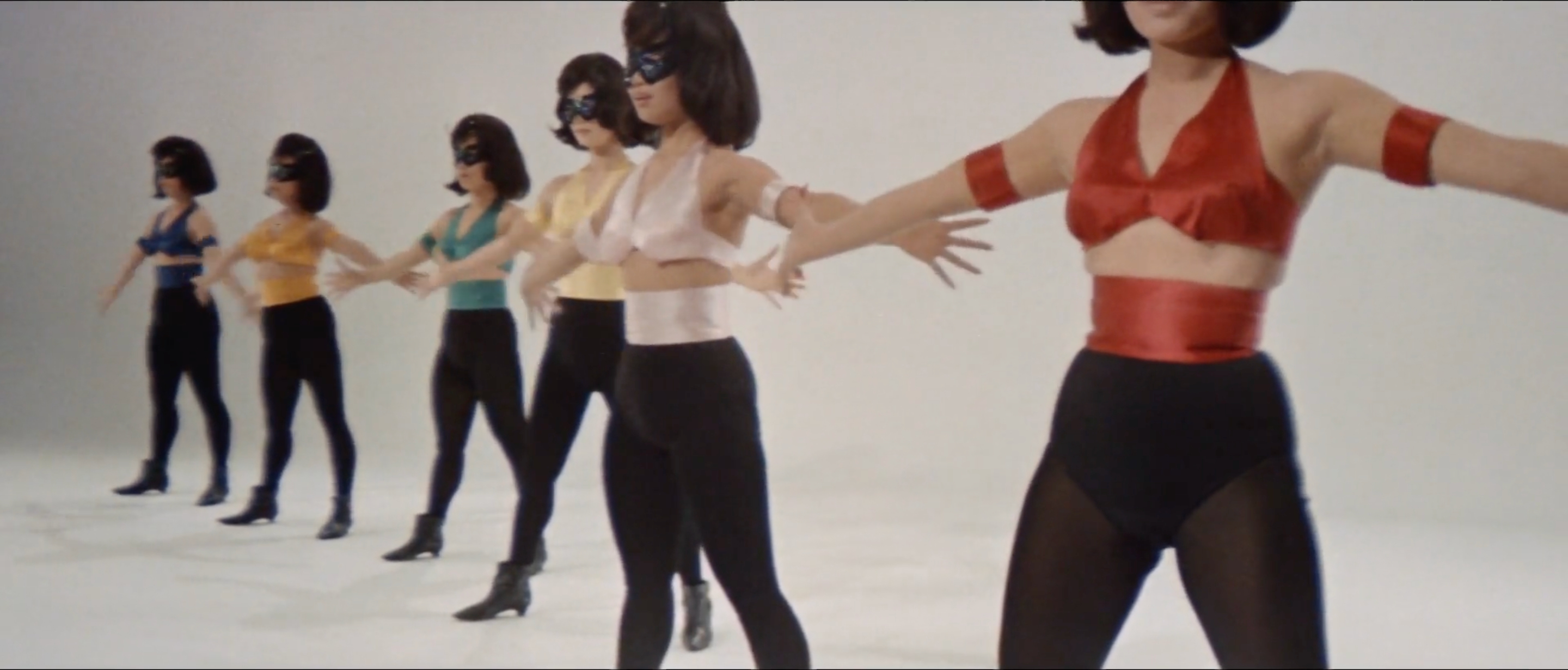
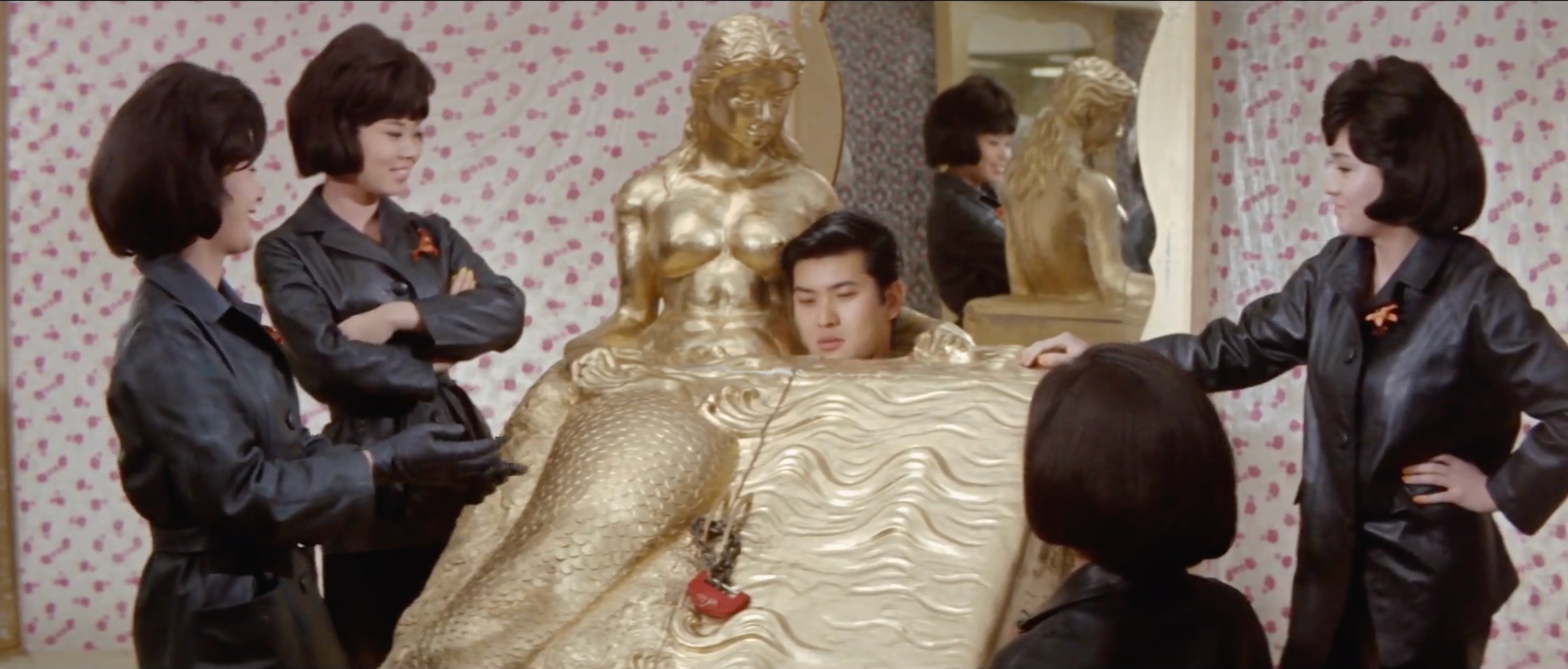
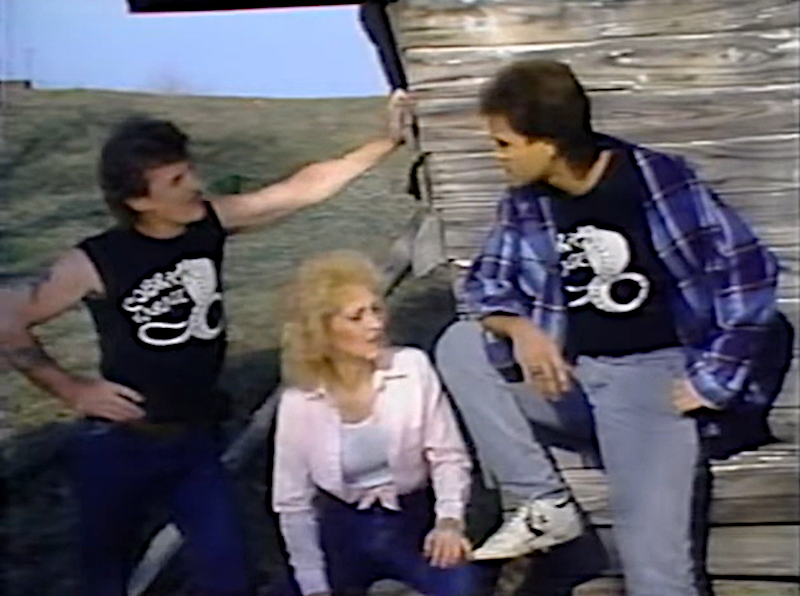
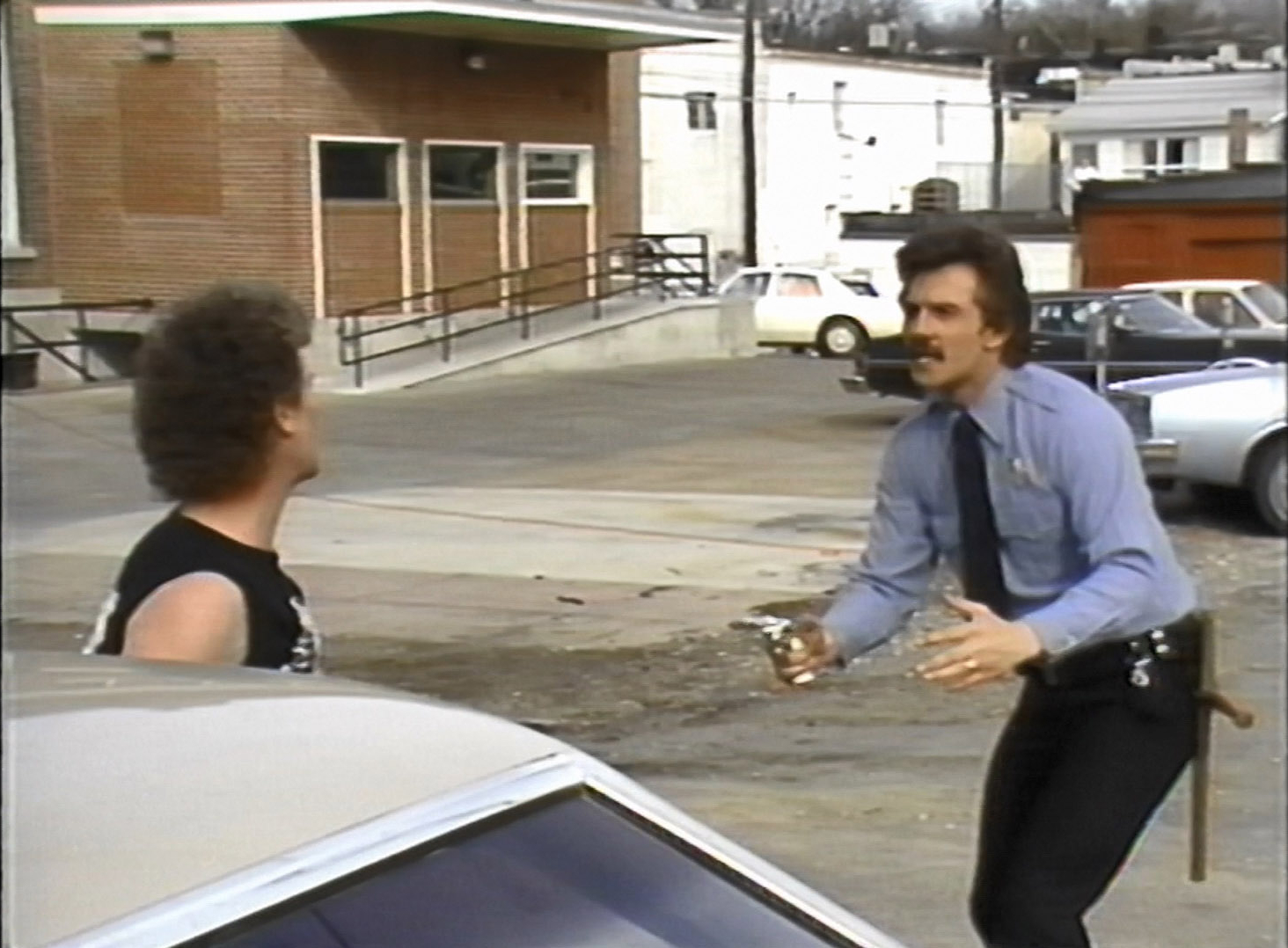
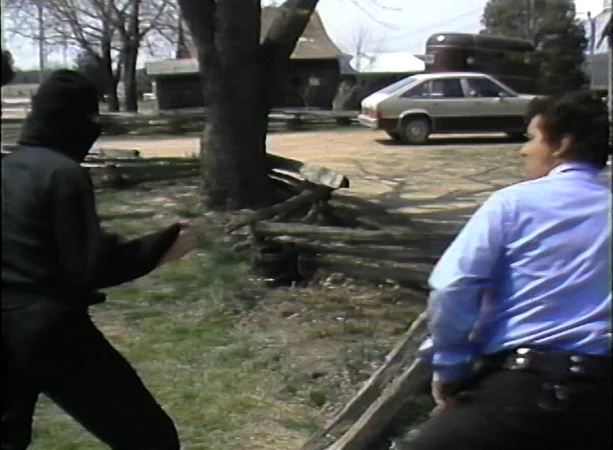
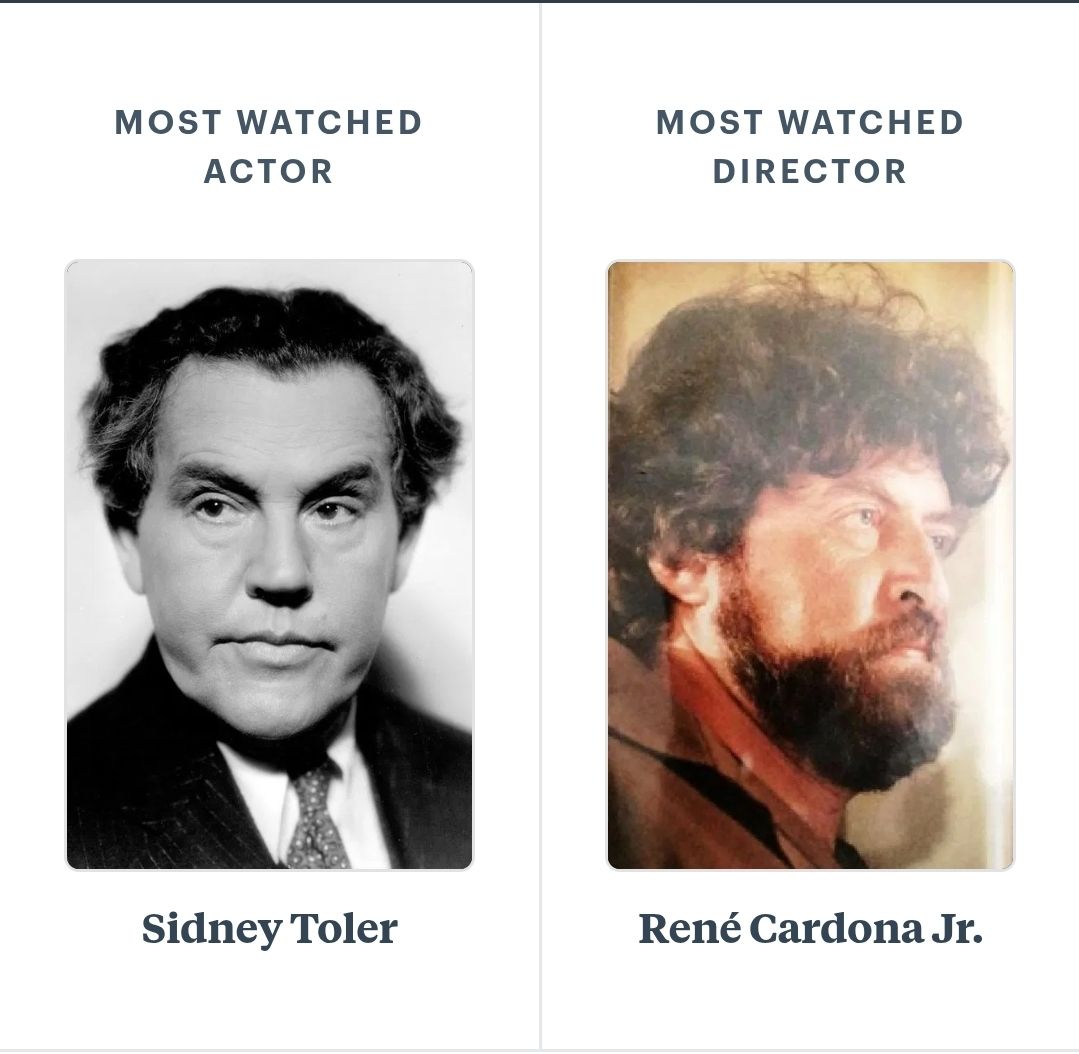

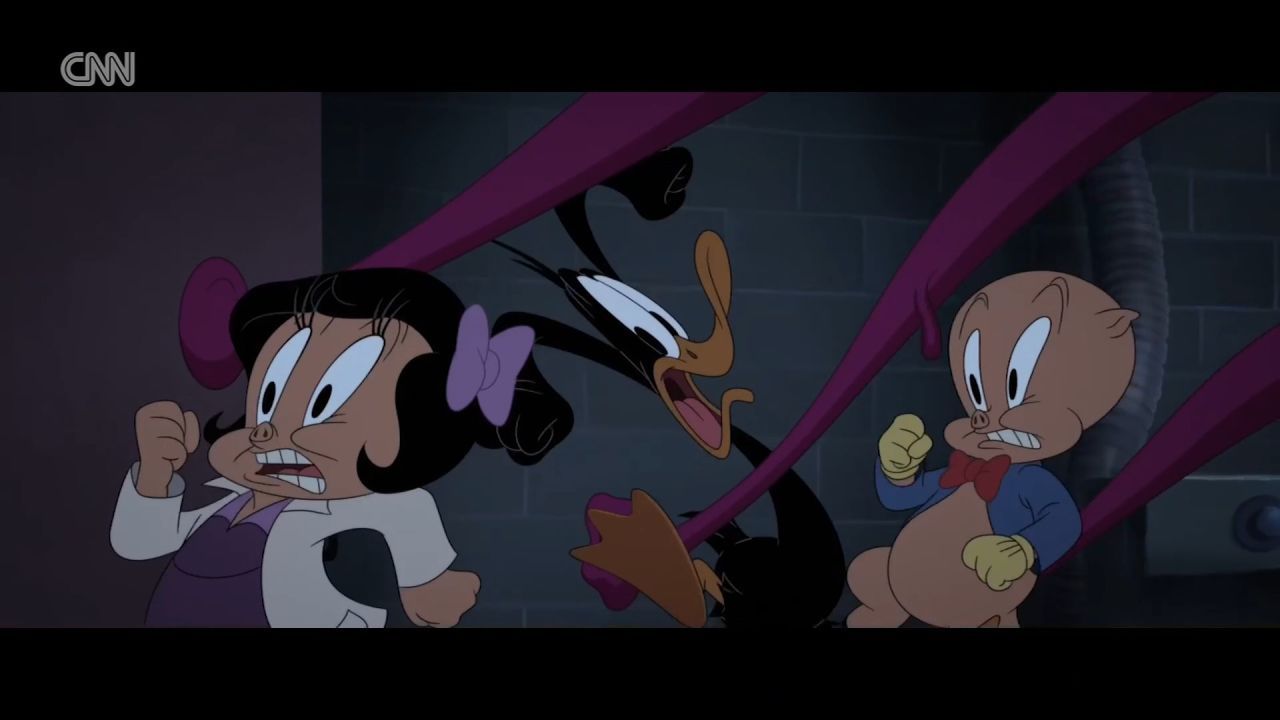

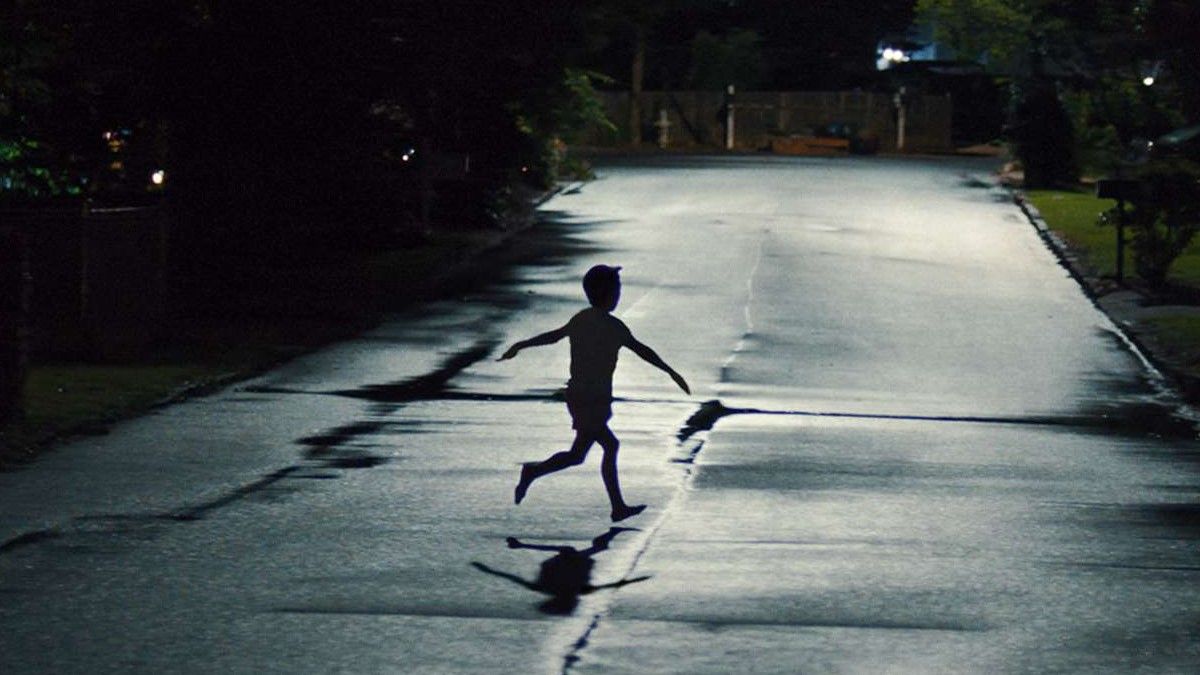


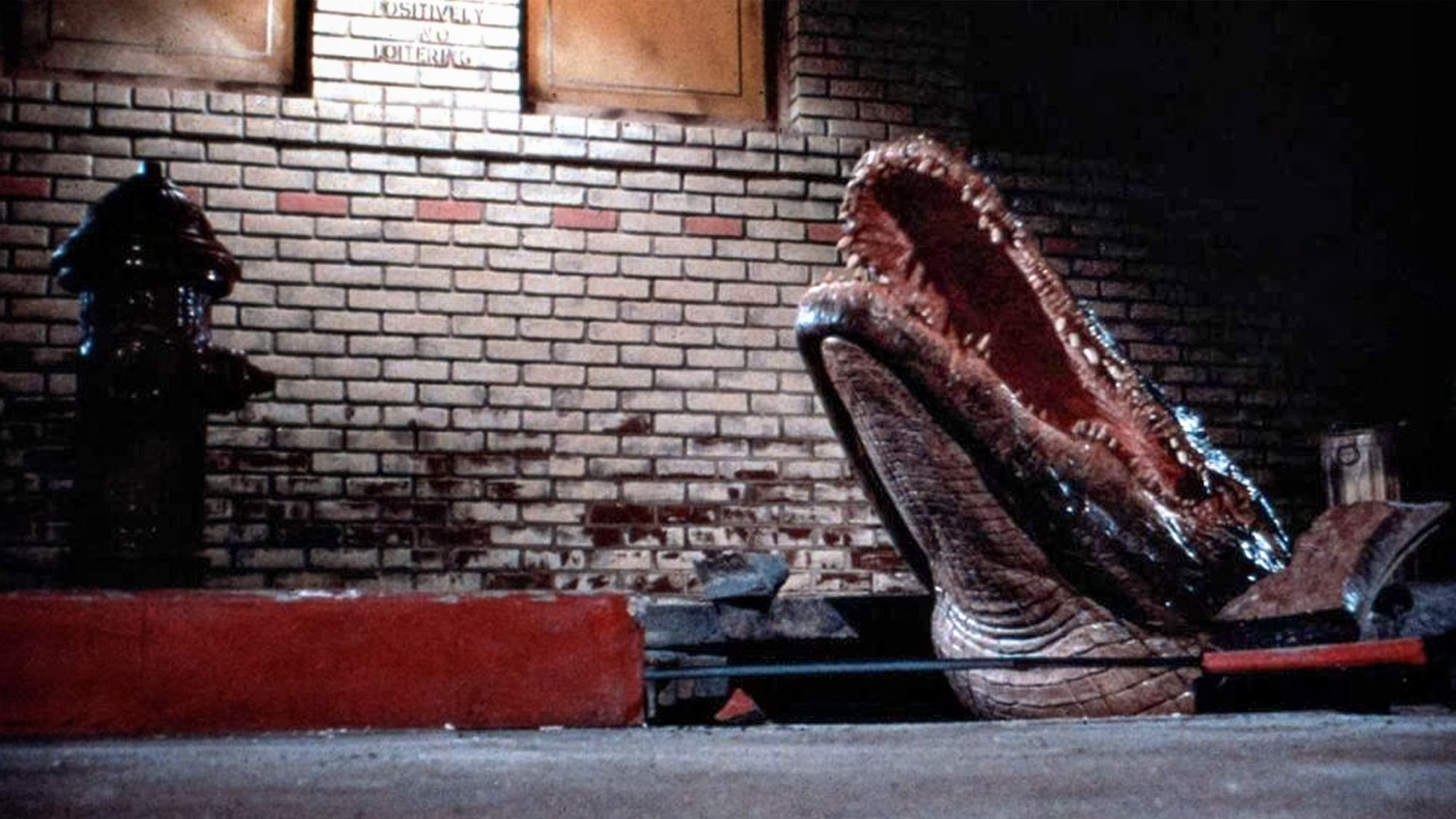



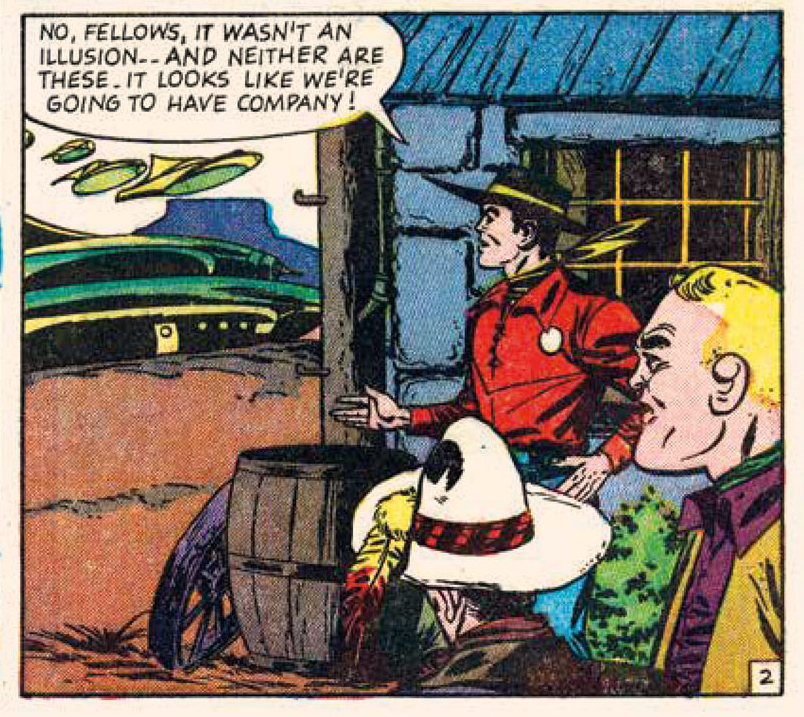


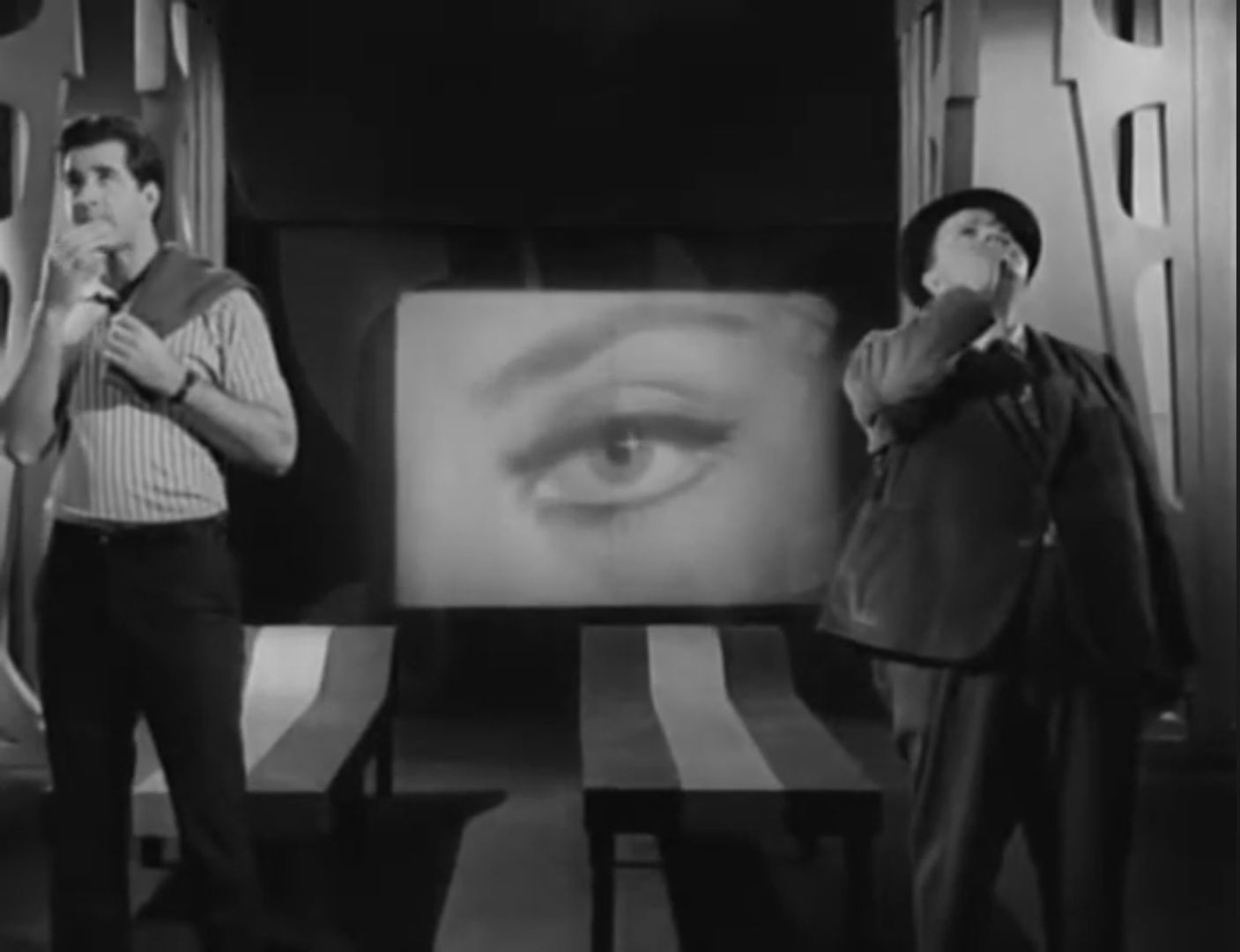
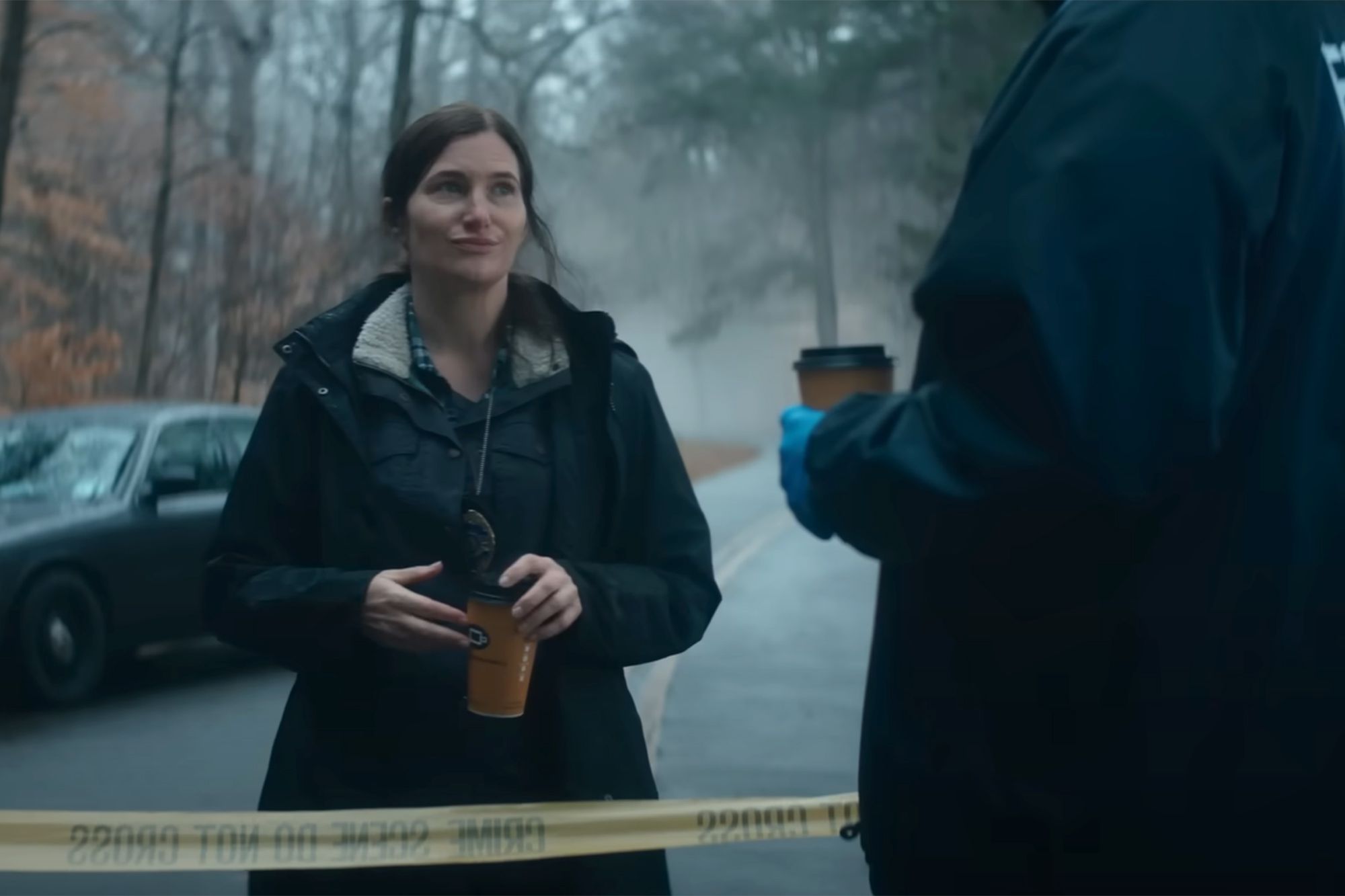
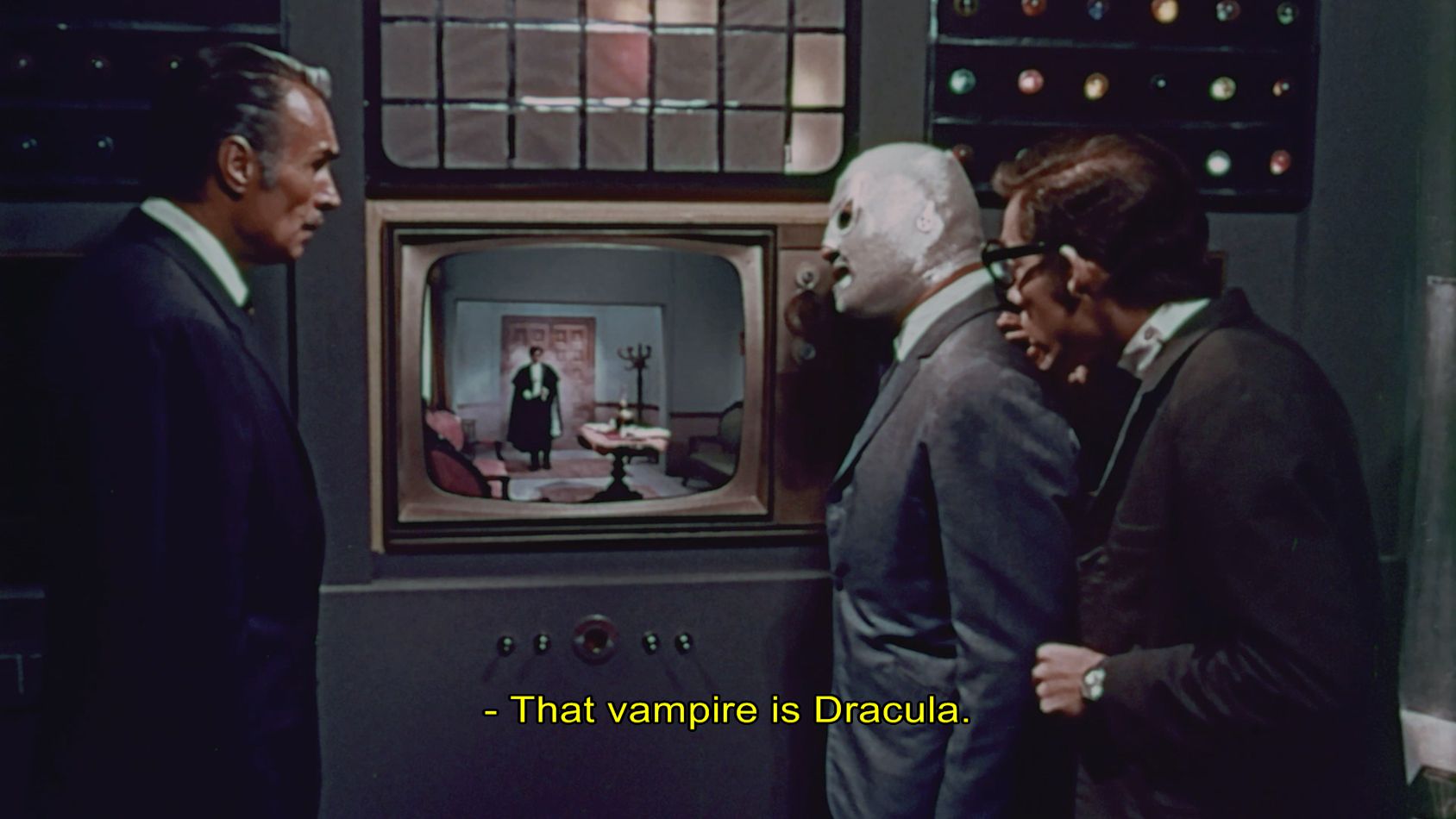

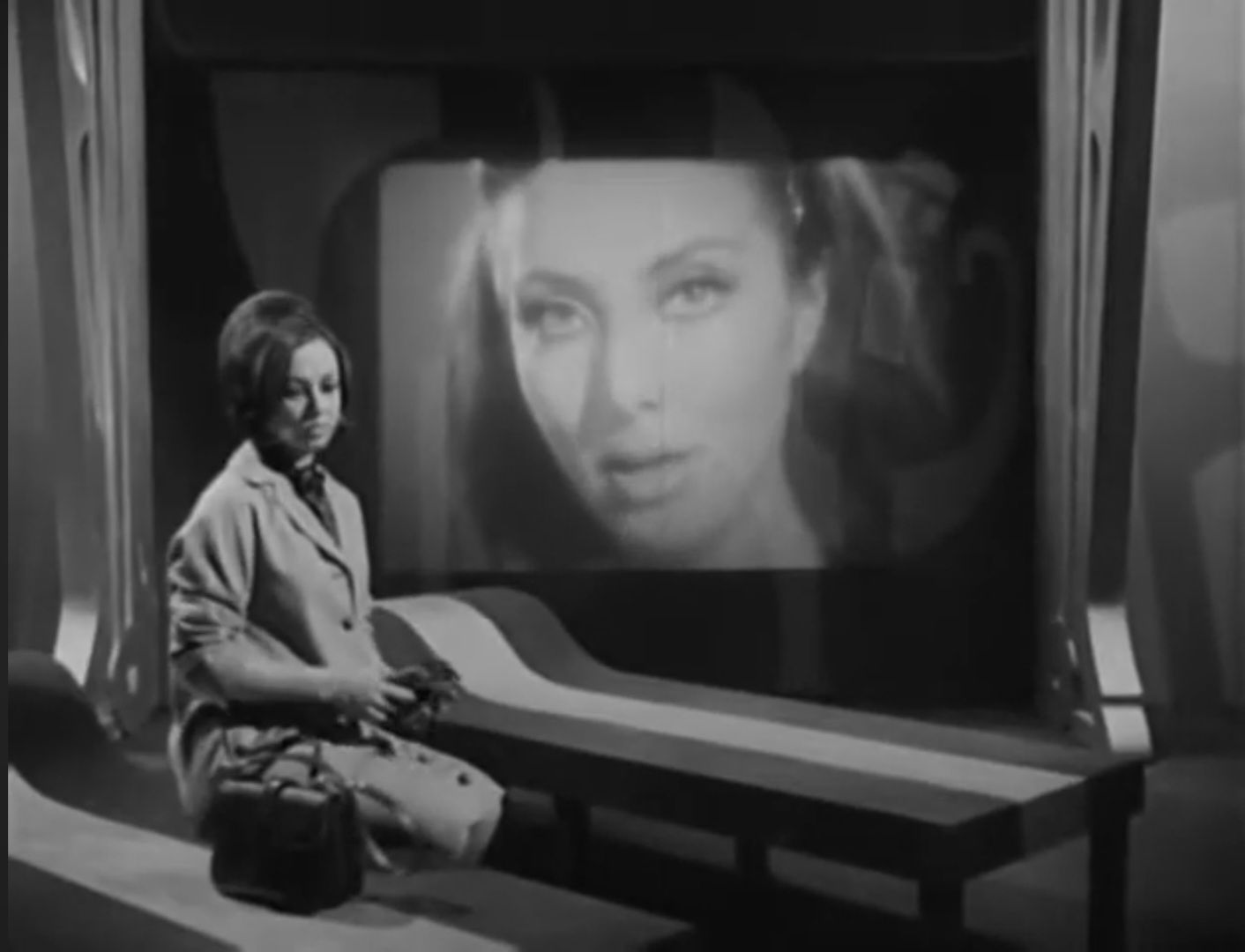


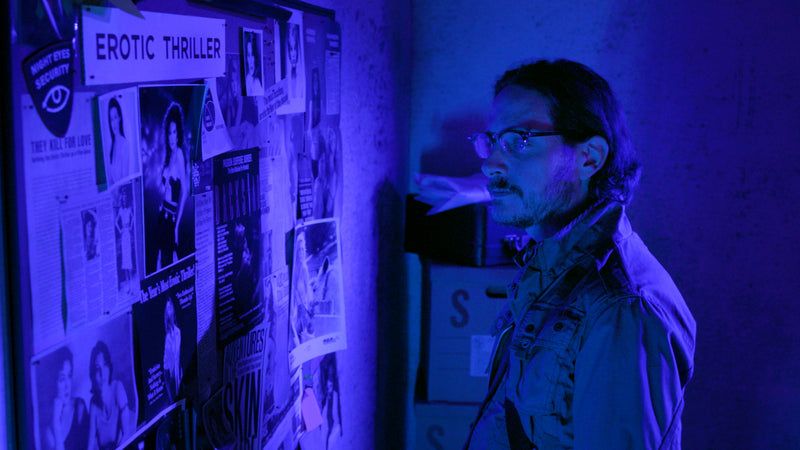


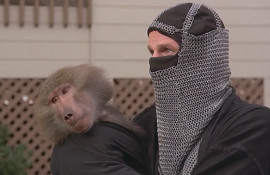

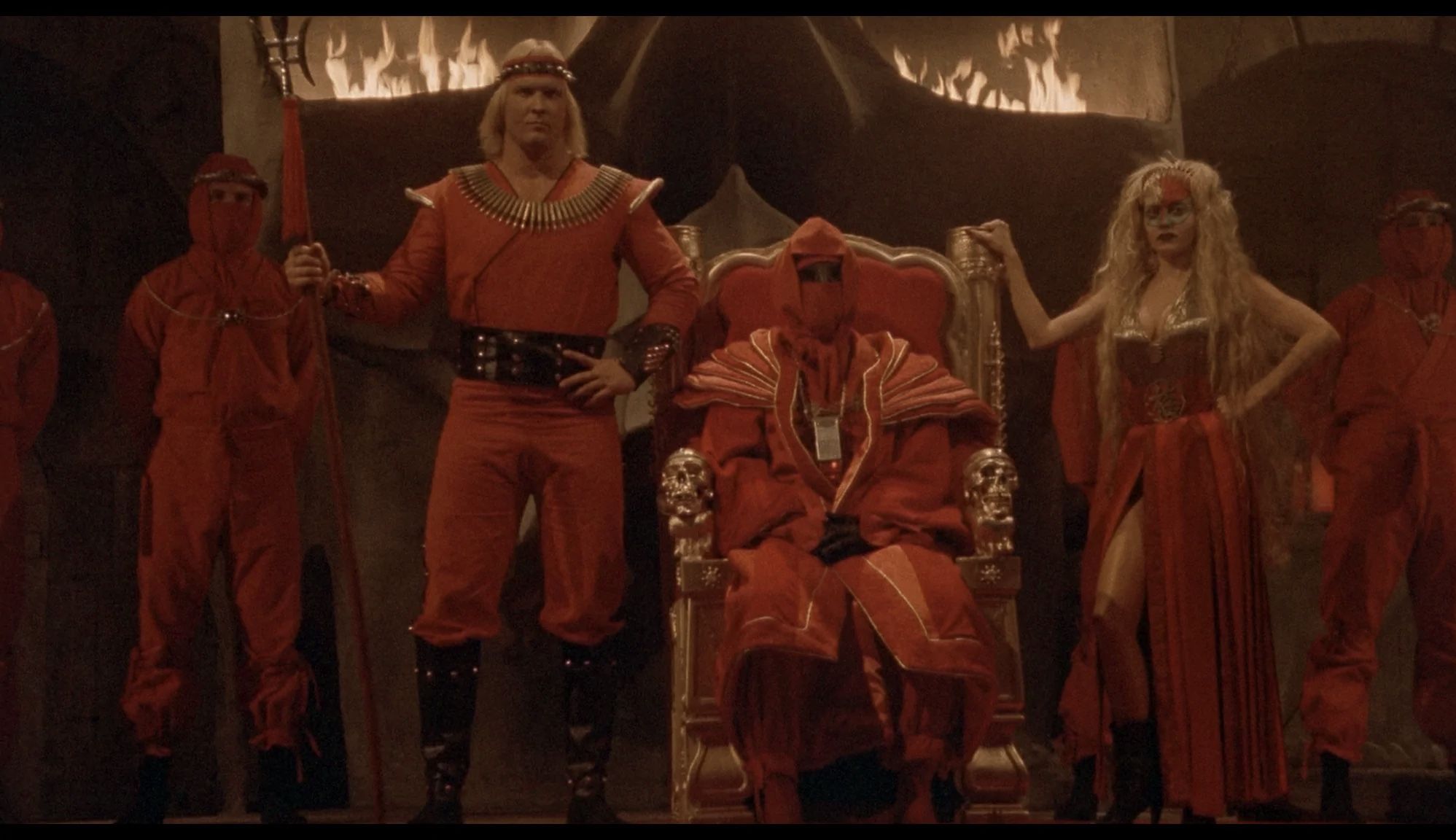

 Medleyana